


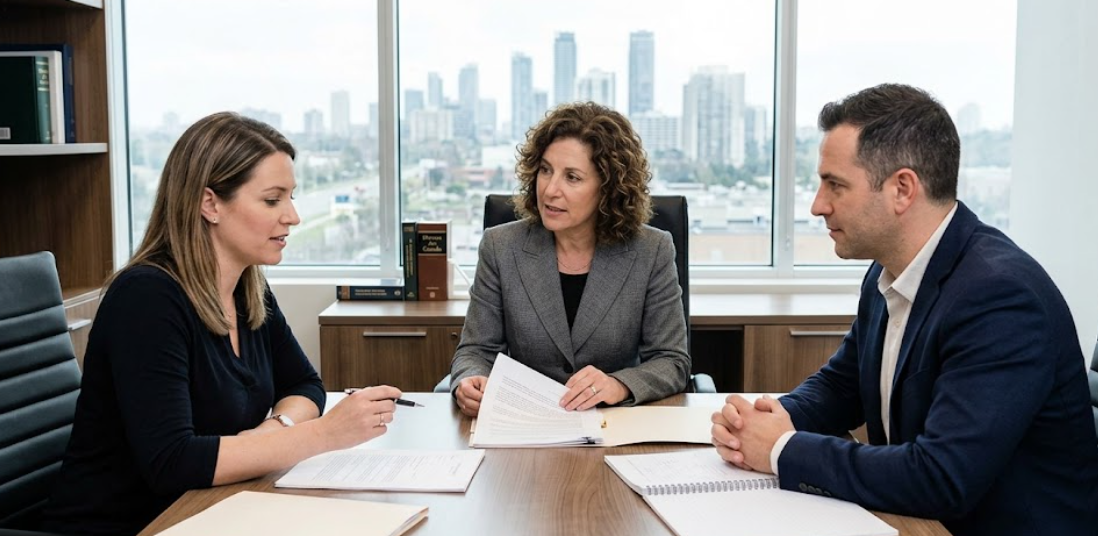
Divorce is not only an emotional decision. It is also a legal process that affects your home, finances, parenting arrangements, future responsibilities, and long-term security.
Many people start by asking a simple question: “How do I handle divorce legally in Canada?” The honest answer is that it depends on where you live, whether you and your spouse agree on key issues, and whether there are children, property, support, or business assets involved.
In Canada, divorce itself is governed by the federal Divorce Act, but the court process and many related family law issues are handled by each province or territory. For example, Ontario has its own rules for filing divorce documents, dividing family property, and resolving parenting or support matters. The federal government confirms that at least one spouse must have lived in a Canadian province or territory for at least one year before applying for divorce there.
For families in the GTA, speaking with experienced divorce lawyers Brampton or trusted family counsel in Mississauga or Toronto can help you understand what steps apply to your situation before you make any major decisions.
What Is the Legal Process for Divorce in Canada?
A legal divorce in Canada is granted by a court. Even when both spouses agree, the divorce must still go through the proper legal process.
In most cases, the divorce is based on the breakdown of the marriage. The most common ground is living separately and apart for at least one year. Other grounds may include adultery or cruelty, although the majority of spouses proceed based on separation because it is usually less conflict-driven.
The process generally involves:
- Confirming that you meet the residency requirement.
- Deciding whether the divorce will be joint, simple, or contested.
- Preparing the correct provincial court forms.
- Addressing parenting, support, property, and financial disclosure.
- Filing documents with the appropriate court.
- Waiting for the court to review and grant the divorce order.
The Government of Canada explains that the Divorce Act is federal, but each province and territory manages the forms and court process for divorce applications.
This is why legal advice should be local. A person filing in Ontario needs guidance based on Ontario court rules, Ontario property division, and Ontario family law procedures.
What Are Your Legal Rights in a Divorce in Canada?
Understanding your legal rights in divorce Canada is one of the most important steps before signing anything.
Your rights may involve parenting time, decision-making responsibility, child support, spousal support, property equalization, possession of the matrimonial home, and financial disclosure. These rights are not always obvious, especially when one spouse handled most of the finances or when property is held in only one person’s name.
A common example is the main family home. One spouse may assume, “The house is in my name, so I decide what happens to it.” In Ontario, that assumption can be legally risky. The matrimonial home has special protection, and both spouses have rights connected to it, regardless of whose name is on the title.
Your rights may also depend on whether you were legally married or in a common-law relationship. Married spouses and common-law partners are not treated the same way for property equalization in Ontario.
This is where legal guidance becomes practical, not just technical. A lawyer can explain what the law says, what documents are needed, and what risks may exist before you agree to a settlement.
How Is Property Divided After Divorce in Ontario?
Many spouses ask, “Does everything get split 50/50 after divorce?”
The answer is more precise than that.
In Ontario, married spouses usually deal with property through a process called equalization of net family property. This does not always mean every asset is physically divided in half. Instead, each spouse calculates the value of their net family property, and the spouse with the higher value may owe an equalization payment to the other.
Ontario’s Family Law Act sets out how net family property and excluded property are treated. Certain property, such as some gifts or inheritances from third parties, may be excluded if properly traceable and not mixed into family property.
When looking at how property is divided after divorce, the following items often need careful review:
- The matrimonial home.
- Bank accounts and investments.
- Pensions and retirement savings.
- Business interests.
- Vehicles.
- Debts and liabilities.
- Gifts or inheritances.
- Real estate owned before or during the marriage.
The most important point is this: property division is document-driven. Guesswork can create serious problems. Bank records, mortgage statements, business valuations, pension details, and ownership documents may all matter.
Why Is the Matrimonial Home Treated Differently?
The matrimonial home is often the most emotional and legally sensitive part of a divorce.
In Ontario, both spouses have equal rights of possession in the matrimonial home, even if only one spouse is registered as the owner. That means one spouse should not assume they can sell, mortgage, or force the other spouse out without proper legal steps.
The matrimonial home can also be treated differently in the equalization calculation compared to other property. For example, the value of a home brought into the marriage may not receive the same deduction treatment as other pre-marriage assets if it is still the matrimonial home at separation.
For families in Brampton, Mississauga, and Toronto, this issue can become even more important because real estate values may represent a large portion of the family’s total wealth.
Before making decisions about the home, speak with a lawyer. Moving out, changing locks, refinancing, or signing sale documents without legal advice can affect your position.
What Is a Joint Divorce in Ontario?
A joint divorce Ontario application may be an option when both spouses agree to approach the court for a divorce together.
This usually works best when both parties have already resolved the major issues, such as parenting arrangements, support, property division, and the matrimonial home. Ontario’s family court procedure allows spouses to file a joint divorce application using the required forms, including Form 8A and supporting documents.
A joint divorce may be suitable when:
- Both spouses agree that the marriage has ended.
- There are no unresolved parenting disputes.
- Support arrangements are clear.
- Property issues have been settled.
- Both parties are willing to sign and file documents cooperatively.
However, “joint” does not mean “informal.” The agreement still carries legal consequences. If one spouse does not understand what they are signing, problems can appear later.
For that reason, many couples still ask a family lawyer to review the agreement before filing.
What If the Divorce Is Not Amicable?
Not every divorce may be handled cooperatively.
Sometimes one spouse refuses to disclose financial information. Sometimes parenting issues are urgent. In other situations, there may be family violence, pressure, intimidation, hidden assets, or a serious power imbalance.
In these cases, a more formal court process may be necessary.
A contested divorce may involve court conferences, disclosure requests, motions, and judicial decisions. While many matters still settle before a trial, the court process can provide structure when one person is not acting fairly or safely.
If you are dealing with a serious conflict, do not rely only on online forms or general information. Speak with qualified legal counsel as early as possible.
Families in Peel Region can benefit from working with family lawyers Mississauga who understand both the legal process and the local realities of family disputes.
Can Technology or Online Tools Help With Divorce?
Online tools can help organize information. They may assist with checklists, document preparation, budgeting, or sorting financial records.
But technology cannot replace legal judgment.
A form may ask for dates and names, but it will not tell you whether your property rights are being protected. A calculator may help estimate numbers, but it will not identify whether an inheritance was properly excluded or whether a business valuation needs closer review.
This is especially important in cases involving:
- Children
- Family businesses
- Multiple properties
- High-value assets
- Spousal support questions
- Immigration-related family concerns
- Cross-border property or income
- Unequal financial knowledge between spouses
Technology may support the process, but legal strategy should come from a trained legal professional.
How Do Parenting and Support Issues Affect Divorce?
A divorce order legally ends the marriage. But if spouses have children, the court will also want to know that proper arrangements have been made for them.
Parenting issues may include:
- Where will the children live?
- How will parenting time be shared?
- Who will make major decisions about their education, health, religion, and activities?
- Holiday and vacation schedules.
- Communication between parents.
- Child support.
The Divorce Act now uses terms such as “parenting arrangements” instead of older language like “custody” and “access.” The federal government notes that these terminology changes came into effect with the Divorce Act updates, while the basic grounds for divorce did not change.
Support must also be handled carefully. Child support is the right of the child, not a bargaining tool between parents. Spousal support may also arise depending on the length of the marriage, roles during the relationship, income difference, and financial circumstances.
Why Local Legal Advice Matters in Brampton, Mississauga, and Toronto
Family law is personal, but it is also local.
A family going through divorce in Brampton may deal with different court scheduling realities, local filing practices, and regional expectations than someone outside the GTA. Toronto families may face added complexity involving business interests, investment properties, or cross-jurisdictional issues. Mississauga families may need advice that connects divorce, real estate, parenting, and financial planning.
This is why many people choose to speak with Family Lawyers Toronto or family lawyers in their own region before deciding how to proceed.
Local legal advice can help you understand:
- Which court process applies?
- What documents are required?
- Whether your matter is suitable for a joint divorce.
- How may property division apply?
- Whether urgent court steps are needed.
- What should be included in a separation agreement?
- How to protect your long-term interests?
Good legal advice does not make the divorce more hostile. In many cases, it prevents conflict by making expectations clear from the beginning.
Practical Steps to Handle Divorce Legally in Canada
If you are preparing for a divorce, start with structure.
First, gather key documents. This may include marriage certificates, tax returns, pay stubs, mortgage statements, bank records, pension statements, business documents, loan details, and property ownership records.
Second, avoid making major decisions under pressure. Do not sign a separation agreement, transfer property, move money, or make parenting changes without understanding the consequences.
Third, think about the type of process that fits your situation. If both spouses agree, a joint divorce may be possible. If there are unresolved issues, negotiation, mediation, collaborative family law, or the court process may be needed.
Fourth, get legal advice before finalizing anything. A divorce agreement should not only solve today’s problem. It should also protect your future.
Key Takeaways
Divorce in Canada must follow a legal process, even when both spouses agree.
In Ontario, property division is usually handled through equalization of net family property, not a simple division of every item.
The matrimonial home has special legal protection and should not be dealt with casually.
A joint divorce in Ontario may be suitable where both spouses agree on all major issues.
Technology can help with organizing, but it cannot replace legal advice.
Your legal rights in divorce in Canada depend on your family structure, province, property, children, and financial circumstances.
Speak With Nanda & Associate Lawyers
Divorce can feel overwhelming, but the right legal guidance can help you move forward with clarity.
At Nanda & Associate Lawyers, our family law team assists clients across Brampton, Mississauga, Toronto, and the GTA with divorce, separation agreements, parenting issues, support, property division, and joint divorce applications.
Whether your matter is straightforward or complex, our team can help you understand your options and protect your legal rights.
Book a consultation with Nanda & Associate Lawyers to discuss the next step in your divorce process.