


In January 2023, a Mississauga homeowner discovered a C$200,000 mortgage had been registered against their title by an impostor using a stolen identity. This scenario isn’t just a rare anomaly; it’s a sophisticated threat currently facing many residents across the Peel Region. You’ve likely spent decades building equity, and the fear of losing it all to a faceless scammer is a heavy burden to carry. If you’re searching for how to protect myself from real estate fraud, you aren’t alone in your concern. Your home is your most significant asset, and it requires a robust legal shield to remain secure.
We believe that every homeowner deserves total confidence in their property title. You might feel uncertain about how these scams occur or whether your current insurance is enough to stop them. This guide reveals the essential legal strategies and proactive steps you can take to secure your property and identity against sophisticated scams. We’ll provide a clear prevention checklist and explain how title insurance works to provide lasting peace of mind. By following this professional roadmap, you’ll gain the clarity needed to safeguard your investment for years to come.
Key Takeaways
-
Understand why the high-value Mississauga housing market is a primary target for title theft and how sophisticated fraudsters exploit property rights for financial gain.
-
Learn how the Ontario Land Titles Act and the Electronic Land Registration System provide the legal framework for securing your property ownership.
-
Gain actionable insights on how to protect myself from real estate fraud by prioritizing title insurance and maintaining strict digital hygiene to secure your personal identity.
-
Identify the critical red flags of real estate scams, including unconventional mortgage offers and the anatomy of a typical "Title Theft" pitch.
-
Discover the vital role a real estate lawyer plays in verifying identities and conducting thorough title searches to uncover undisclosed liens or encumbrances before closing.
Table of Contents
-
Understanding Real Estate Fraud in the Mississauga Housing Market
-
The Legal Framework: How Ontario Law Defines Property and Title Fraud
-
Recognizing the Warning Signs: How Real Estate Scams Transition from Pitch to Closing
-
Proactive Strategies to Shield Your Property from Fraudulent Activity
-
How a Real Estate Lawyer in Mississauga Secures Your Transaction
Understanding Real Estate Fraud in the Mississauga Housing Market
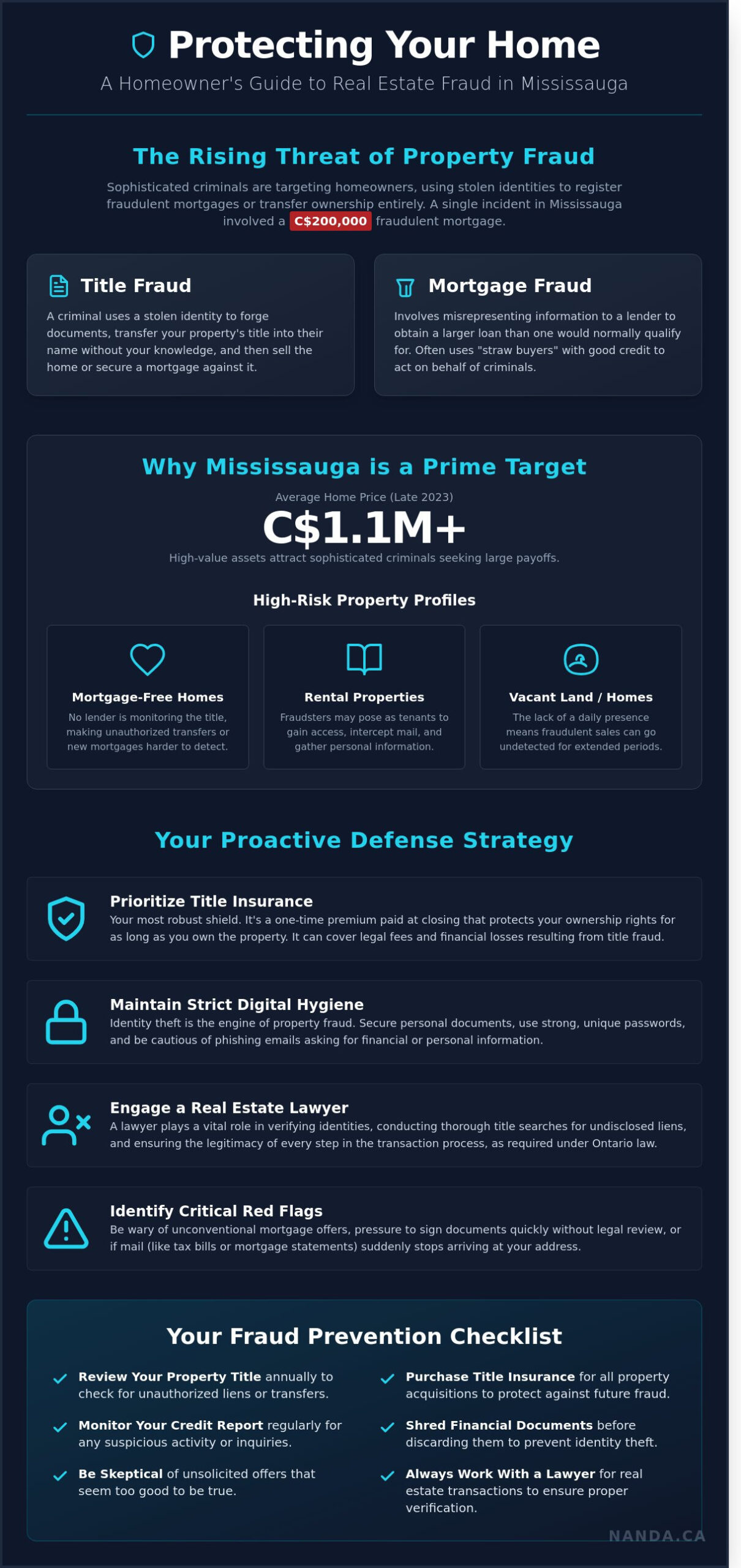
Real estate fraud involves the intentional misrepresentation or theft of property rights to secure an unlawful financial gain. In Mississauga, this criminal activity has become increasingly sophisticated as property values climbed significantly over the last decade, with the average home price sitting near C$1.1 million in late 2023. High-value markets attract fraudsters because a single successful transaction can yield hundreds of thousands of dollars in illicit profit. For many residents, the primary concern is learning how to protect myself from real estate fraud before a crisis occurs.
The two most common forms are title fraud and mortgage fraud. Title fraud occurs when a criminal uses stolen identity documents to transfer your home’s ownership into their name without your knowledge. Conversely, Understanding Mortgage Fraud is essential because it involves misrepresenting information to a lender to obtain a loan or a larger mortgage than would otherwise be approved. Both crimes leave a trail of financial destruction. Victims often face years of litigation to reclaim their property rights, making the guidance of experienced real estate lawyers in Mississauga an absolute necessity to navigate the recovery process.
The Rise of Identity Theft in Property Transactions
Identity theft is the engine driving modern property scams. Criminals use forged passports or driver’s licenses to pose as legitimate homeowners, often targeting properties where the owner is deceased or living abroad. In 2023, several high-profile cases in the Greater Toronto Area involved "straw buyers." These are individuals paid to use their good credit to apply for fraudulent mortgages on behalf of a criminal organization. These schemes often result in unauthorized property transfers that go undetected until a tax bill or mortgage statement fails to arrive at the correct address.
Key Takeaways for Mississauga Homeowners
The risks aren’t just theoretical; they include equity theft and massive mortgage liabilities that can take years to resolve. Certain properties are more vulnerable than others in the current market. You should be especially vigilant if you own the following:
-
Mortgage-free homes: These are prime targets because there’s no existing lender to flag suspicious discharge or transfer activity.
-
Rental properties: Fraudsters may pose as tenants to gain physical access to the property and intercept mail containing personal information.
-
Vacant land: The lack of a daily presence makes unauthorized sales significantly easier to hide for long periods.
Early detection remains your best defense. Regular title monitoring and credit checks provide a vital early warning system. Understanding how to protect myself from real estate fraud starts with recognizing that your home’s equity is a target for organized crime. We recommend that homeowners review their property title records annually to ensure no unauthorized liens or transfers have been registered.
The Legal Framework: How Ontario Law Defines Property and Title Fraud
Ontario manages property rights primarily through the Land Titles Act, R.S.O. 1990. This law creates a definitive record for every parcel of land in Mississauga, ensuring that the person named on the title is the true owner. Most properties in the city transitioned from the old, paper-based Registry Act to the Electronic Land Registration System by 2010. While this digital shift made transactions faster, it also shifted the focus of security from physical deeds to digital identity verification. Understanding this system is a vital part of learning how to protect myself from real estate fraud before a transaction even begins.
The system operates on two core legal theories: the mirror principle and the curtain principle. The mirror principle dictates that the public register is a perfect reflection of all interests affecting the land. The curtain principle means a purchaser doesn’t need to look behind the current certificate of title to verify historical ownership. These principles provide certainty for buyers, but they can be exploited. If a fraudster successfully registers a forged transfer, the "mirror" now reflects them as the owner. The Director of Titles has the power to rectify the register under Section 57 of the Act, but resolving these disputes often requires extensive proof that the transfer was indeed fraudulent.
The Statutory Protection of the Land Titles Assurance Fund
The Land Titles Assurance Fund serves as a financial safety net for people who lose their interest in land due to administrative errors or fraud. It’s intended to compensate victims who can’t recover their land through other legal means. However, the eligibility requirements are incredibly strict. You must prove that the loss was not caused by your own neglect and that you’ve exhausted all other options to recover the property. It’s a fund of last resort, and it doesn’t always cover the full emotional or secondary financial toll of a stolen home. Relying solely on the fund is risky; it’s better to implement proactive safeguards like title insurance.
Legal Recourse and Civil Litigation Options
When a fraudulent transfer is discovered, speed is the most important factor. Experienced civil litigation lawyers can move to file a "caution" on the property title immediately. This legal notice effectively freezes the property, preventing the fraudster from selling it or taking out further mortgages while the matter is in court. Because real estate fraud involves complex statutory interpretations, these cases are heard in the Ontario Superior Court of Justice. Our team works to reverse these transfers and restore the rightful owner to the title. If you’re concerned about your property’s security, seeking comprehensive legal solutions early can prevent a minor vulnerability from becoming a total loss. Knowing these legal avenues is essential when researching how to protect myself from real estate fraud in a high-value market like Mississauga.
Recognizing the Warning Signs: How Real Estate Scams Transition from Pitch to Closing
Title theft in Ontario typically follows a calculated trajectory. It begins with identity theft, where a fraudster acquires your personal data through phishing, data breaches, or stolen mail. They then use high-quality forged identification to pose as the homeowner. In 2023, several cases emerged in the GTA where organized groups successfully transferred titles and secured mortgages exceeding C$250,000 before the actual owners realized their identity was compromised. These criminals exploit "Know Your Client" (KYC) protocols by providing documents that appear legitimate to busy professionals. If you’re researching how to protect myself from real estate fraud, you must understand that digital signatures are a primary vulnerability. While convenient, a digital signature without a secondary identity verification step, like a live video call or biometric scan, offers little protection against a dedicated scammer who’s already stolen your basic profile.
Mortgage Foreclosure and Equity Stripping Scams
Homeowners facing financial pressure are often targeted by "equity strippers." These scammers promise to consolidate debt or save a home from foreclosure through unconventional private lending. They often present a complex contract that effectively transfers the home’s title to the scammer while the owner believes they’re simply signing a new mortgage agreement. You should never sign a document without Independent Legal Advice (ILA). Predatory lenders often discourage ILA, claiming it’s an unnecessary expense that will delay your funding. If a lender pressures you to use their specific lawyer or bypass your own real estate lawyer in Mississauga, it’s a clear signal of fraudulent intent. True protection comes from having an objective legal professional review every line of a "debt consolidation" offer before your equity is signed away.
Red Flags in Documentation and Communication
Fraudsters rely on speed to bypass scrutiny. A "rush" request to close a deal in under 72 hours is a classic tactic used to prevent lawyers and banks from performing deep due diligence. You should verify the physical location of every party involved; scammers often use virtual offices or temporary co-working spaces to mask their true operations. Awareness of these tactics is essential when considering how to protect myself from real estate fraud. Common red flags include:
-
Identification documents with inconsistent fonts, blurry photos, or slightly altered government seals.
-
Buyers or lenders who refuse to meet via video or in person, often citing sudden overseas travel or health emergencies.
-
Unsolicited offers to buy your home for cash without a formal listing or inspection.
-
Pressure to wire funds to accounts that aren’t held in trust by a licensed Canadian law firm.
When these signs appear, consult the Ontario Government Resources for Fraud Victims to understand your immediate next steps. Protecting your property requires a methodical approach that refuses to be hurried by artificial deadlines or "once-in-a-lifetime" financial promises. Our team sees these patterns frequently and emphasizes that a slow, verified process is your best defense against sophisticated title and mortgage fraud.
Proactive Strategies to Shield Your Property from Fraudulent Activity
Securing your home in Mississauga involves more than just physical locks; it requires a strategic defense against sophisticated white-collar crime. If you’re wondering how to protect myself from real estate fraud, the most effective step is purchasing a comprehensive title insurance policy. This protection acts as a financial and legal safety net that remains in place as long as you own your home.
The Critical Importance of Title Insurance
Many homeowners confuse a Title Opinion with a Title Insurance policy. A lawyer’s Title Opinion is a professional assessment of the property’s status at the exact moment of purchase. In contrast, a Title Insurance policy provides ongoing protection against future threats that a standard search might not reveal. It’s a one-time premium that offers peace of mind for the entire duration of your ownership.
This policy covers the substantial legal defense costs required to fight a fraudulent claim. If a criminal manages to transfer your title, the insurance company handles the legal process and costs to restore your name to the deed. Even if you’ve lived in your home for 15 or 20 years without a policy, you can still purchase a "homeowner’s policy" today to secure your accumulated equity against modern threats.
Identity Protection and Home Security
Identity theft is often the precursor to property fraud. Criminals use your Social Insurance Number (SIN) or intercepted property tax bills to impersonate you during a sale or mortgage application. Don’t leave your mail in an unsecured box for long periods. If you own a rental unit or a vacant lot, check on the property at least once every 30 days. Unauthorized sales often happen when a property appears neglected or the owner is frequently absent.
Always notify your mortgage lender immediately if your primary contact information changes. This simple step prevents fraudsters from redirecting important correspondence or default notices to a different address. Learning how to protect myself from real estate fraud also involves monitoring your credit report through agencies like Equifax Canada. A sudden drop in your score or an inquiry from a lender you don’t recognize can be the first sign that someone is trying to secure a mortgage in your name.
You should also conduct periodic title searches at the Mississauga Land Registry office to confirm no unauthorized liens or transfers have been registered. Finally, work with wills and estate lawyers in Mississauga to ensure your property is part of a clear, legally binding succession plan. This reduces the risk of fraudulent transfers during probate and ensures your assets remain in trusted hands. Book a consultation with our team to ensure your property interests are fully protected through every stage of ownership.
How a Real Estate Lawyer in Mississauga Secures Your Transaction
Your lawyer serves as the final, most critical gatekeeper in any property deal. In Ontario, legal professionals operate under strict "Know Your Client" (KYC) regulations mandated by the Law Society of Ontario. These rules require us to go beyond a simple glance at a driver’s license. We perform a deep dive into the legitimacy of the parties involved to ensure the person selling the home actually owns it. This level of scrutiny is exactly how to protect myself from real estate fraud when market activity peaks and scammers become more aggressive.
The "Title Search" is another indispensable layer of protection. We examine the property’s history through the Ontario Land Registry Office to uncover undisclosed liens, "zombie mortgages," or unauthorized encumbrances. If a fraudster attempted to register a secondary mortgage without your knowledge, our search identifies this red flag before the transaction closes. For vulnerable homeowners, such as seniors who may be pressured by family members or third parties, we provide Independent Legal Advice (ILA). This ensures the client fully understands the risks and legal consequences of the documents they’re signing, acting as a vital safeguard against predatory lending and title theft.
Due Diligence Beyond the Paperwork
We utilize sophisticated digital verification software to authenticate government issued identification in real time. These tools compare physical ID traits against multi-layered security databases to spot forgeries that the naked eye might miss. If we detect inconsistencies, our team maintains direct communication channels with the Peel Regional Police and other authorities to report suspicious activity immediately. Every dollar in the transaction is handled through our secure, audited trust accounts. This ensures that closing funds aren’t diverted to fraudulent offshore accounts, a common tactic in wire fraud schemes. Our real estate lawyers in Mississauga prioritize these digital safeguards to keep your equity safe.
Securing Your Peace of Mind for the Long Term
Professional legal oversight is a long term investment in your financial stability, not just a closing cost. While a title insurance policy provides a safety net, our proactive due diligence prevents the fraud from occurring in the first place. Nanda & Associate Lawyers offers a comprehensive legal solution because we’re a multidisciplinary firm. If a transaction is compromised, our civil litigation team can step in immediately to seek certificates of pending litigation or injunctions. This seamless transition from solicitor work to courtroom advocacy is how to protect myself from real estate fraud effectively. We don’t just process paperwork; we defend your right to your home.
Don’t leave your most significant asset to chance. Our team is ready to provide the professional, authoritative representation you need to navigate the Mississauga property market safely.
Contact Nanda & Associate Lawyers today for a consultation on securing your property.
Secure Your Mississauga Property with Professional Legal Oversight
Protecting your home requires more than just locking the front door; it demands a rigorous legal defense. Since 2003, our firm has helped Mississauga residents navigate the complexities of title fraud and identity theft in the housing market. By understanding the Ontario Land Titles Act and implementing title insurance, you take the first steps toward total security.
If you’re wondering how to protect myself from real estate fraud during a high-stakes transaction, the answer lies in proactive verification and expert representation. Our team speaks over 15 languages, ensuring you understand every detail of your closing documents without the confusion of dense legalese. We combine deep roots in the local community with comprehensive expertise across real estate, civil litigation, and estate law to safeguard your equity. Don’t leave your largest financial asset to chance.
Book a Consultation with a Real Estate Lawyer in Mississauga
Your peace of mind is our priority as we work together to build a secure future for your family.
Frequently Asked Questions
What is the most common type of real estate fraud in Mississauga?
Title fraud is the most prevalent type of real estate crime in Mississauga. In 2023, the Canadian Anti-Fraud Centre reported that identity theft led to millions of dollars in losses for Ontario property owners. Fraudsters use stolen identification to transfer a home’s title into their name. Once they own the title, they can sell the property or secure high-value mortgages against the home’s equity without the actual owner’s knowledge.
Does title insurance cover me if someone steals my identity to take out a mortgage?
Title insurance definitely covers you if a criminal uses your identity to secure a fraudulent mortgage. If this happens, your policy typically pays for the legal fees required to clear your title and remove the unauthorized debt. It’s a vital tool when considering how to protect myself from real estate fraud. Most policies issued in Ontario since 1990 include these specific protections to help homeowners recover from identity-related property crimes.
How can I check if there is a fraudulent lien on my Mississauga property?
You can check for fraudulent liens by searching your property on the OnLand website, which is Ontario’s official land registry portal. For a government fee of approximately C$30, you can download your parcel register to see every registered interest in your home. This document lists all banks, individuals, or companies that have a claim against your title. If you see an unfamiliar name or financial institution, it’s a sign of potential fraud.
Is it possible for someone to sell my house without me knowing?
It’s possible for criminals to sell your house without your knowledge through sophisticated identity theft. In 2022, several cases emerged in the Mississauga area where fraudsters rented a home using fake IDs and then listed it for sale while the owners were away. They use forged documents to trick real estate agents and lawyers into processing the sale. Regular property inspections and title insurance are the best ways to prevent these devastating losses.
What should I do immediately if I suspect I am a victim of real estate fraud?
Call the Mississauga Police and your financial institutions immediately if you suspect someone has targeted your property. You should also notify the Ontario Land Registry Office to place a stay on any pending transactions involving your title. Report the incident to the Canadian Anti-Fraud Centre at 1-888-495-8501 to help authorities track the criminals. Finally, contact a lawyer to begin the legal process of restoring your title and protecting your home’s equity.
Can a fraudster use a Power of Attorney to steal my home?
A fraudster can use a forged or improperly obtained Power of Attorney to sell your home or take out a mortgage. Under the Substitute Decisions Act, 1992, a Power of Attorney grants significant legal authority over your assets. Criminals sometimes trick vulnerable homeowners into signing these documents or simply forge the signatures. We recommend storing your original legal documents in a secure location and only appointing people you trust implicitly to manage your affairs.
Are older homeowners in Mississauga at a higher risk for property fraud?
Older homeowners in Mississauga face a significantly higher risk because they often have substantial home equity and no existing mortgage. Data from 2023 indicates that fraudsters target seniors because "clear titles" are easier to exploit for large loans. Many seniors don’t check their credit reports or title status as often as younger residents. Understanding how to protect myself from real estate fraud is essential for seniors to ensure their primary asset remains secure.
Does the Ontario government compensate victims of real estate fraud?
The Ontario government provides compensation through the Land Titles Assurance Fund established under the Land Titles Act. This fund is designed to help people who lose their interest in land because of registry errors or specific types of fraud. However, the application process is often complex and requires you to prove that you can’t recover the money from other sources. While it’s a helpful safety net, it doesn’t offer the immediate legal defense provided by title insurance.