




Key Takeaways
- Understand how Ontario’s Family Law Act governs property division and your right to opt-out of statutory equalization rules.
- Learn why the fictional concept of ‘In The Name Of Special Contract Marriage’ translates into a legally binding Marriage Contract under Section 52 of the Family Law Act.
- Discover why starting the drafting process at least six months before your wedding date is critical to avoiding claims of duress.
- Recognize the essential role of experienced family lawyers in ensuring your domestic agreement remains enforceable and resilient against future challenges.
- Gain a clear roadmap for protecting specific assets like pre-marital businesses or family inheritances through a tailored legal strategy.
Table of Contents
-
Defining the Concept: Is There a ‘Special Contract Marriage’ in Ontario Law?
-
Legal Explanation: The Framework of the Ontario Family Law Act
-
Timelines and Process: Drafting Your Marriage Contract in Mississauga
-
Conclusion: Securing Your Future with Nanda & Associate Lawyers Professional Corporation
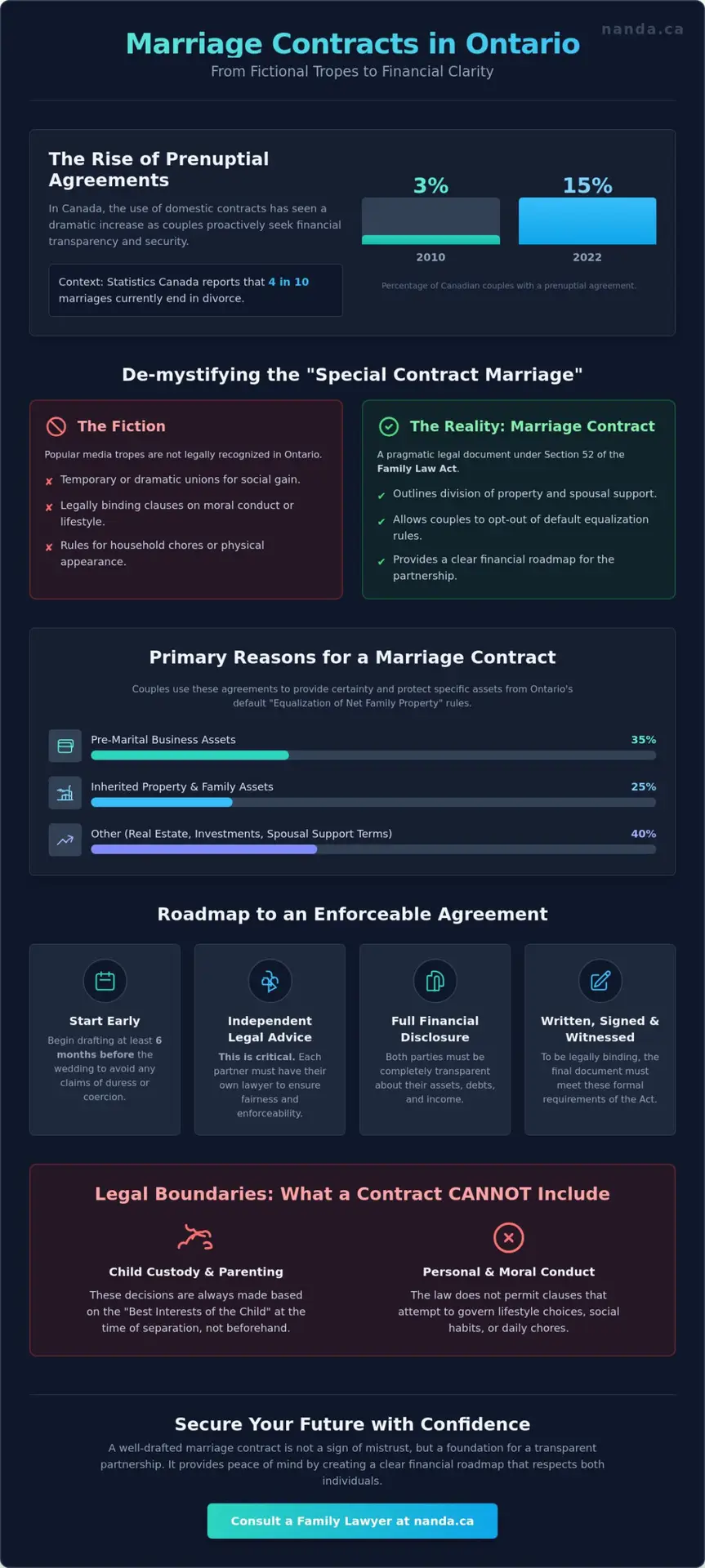
Did you know that while only 3% of Canadian couples signed prenuptial agreements in 2010, that figure surged to 15% by 2022? Many Mississauga residents are moving past the fictional tropes of ‘In The Name Of Special Contract Marriage’ to embrace the practical reality of protecting their financial futures. It’s completely understandable to feel a mix of hope for your union and a pragmatic concern for your assets, especially when Statistics Canada reports that 4 in 10 marriages currently end in divorce.
Our family lawyers believe that clarity is the foundation of peace of mind. Whether you’re looking to protect the pre-marital business assets or the inherited property, a well-drafted domestic contract is your most reliable tool. This guide will walk you through the legal requirements of the Ontario Family Law Act. You’ll discover a clear roadmap for drafting an enforceable agreement that secures your long-term stability and honours your partnership with transparency.
Defining the Concept: Is There a ‘Special Contract Marriage’ in Ontario Law?
Many people are familiar with the popular fiction ‘In The Name Of Special Contract Marriage’, where dramatic arrangements often involve elaborate social rules or temporary unions. In the real legal landscape of Ontario, these tropes don’t exist. Instead, we have "Marriage Contracts," which are formal domestic agreements governed by Section 52 of the Family Law Act. While the fictional versions focus on melodrama, a real-world Prenuptial agreement serves as a pragmatic foundation for a stable partnership. It’s a strategic document that outlines how assets and obligations will be handled, ensuring that both parties enter the union with their eyes open.
In Mississauga, we’ve seen a significant shift in how couples approach these documents. As of 2026, industry reports indicate that nearly 15% of engaged or married couples have signed a domestic contract. This is a massive increase from just 3% in 2010. This trend isn’t about a lack of trust; it’s about clarity. Section 52 allows spouses to enter into an agreement that deals with their respective rights and obligations under the marriage. This includes the division of property, spousal support, and other matters that would otherwise be dictated by default provincial rules. By choosing to define these terms themselves, couples in the Greater Toronto Area are taking control of their financial destinies.
The Purpose of a Marriage Contract in Mississauga
Protecting pre-marital assets is a top priority for many of our clients. Statistics show that 35% of these contracts are created specifically to shield business interests from the equalization process. Others use them to protect family inheritances or real estate holdings acquired before the marriage. By outlining spousal support obligations or waivers early, couples significantly reduce the risk of expensive, protracted litigation if the relationship ends. It provides a financial roadmap that respects both parties’ contributions while providing the security they need to focus on their lives together.
Domestic Contracts vs. Fictional Tropes
It’s vital to understand the strict limitations of these documents under Ontario law. Unlike the ‘In The Name Of Special Contract Marriage’ narratives found in books or television, the Family Law Act does not allow contracts to govern "moral conduct" or personal lifestyle choices. You cannot include legally binding clauses about household chores, social habits, or physical appearance. Crucially, Ontario law prohibits couples from pre-determining child custody or parenting time in a marriage contract. Those decisions always follow the "Best Interests of the Child" standard at the time of separation. To ensure your agreement is valid and won’t be set aside by a court, working with a professional family lawyer in Mississauga is essential. We help ensure your contract is grounded in legal reality rather than fiction.
Legal Explanation: The Framework of the Ontario Family Law Act
The legal foundation for all domestic contracts in our province is Ontario’s Family Law Act. This legislation establishes the default rules for how property is shared when a marriage ends. In Mississauga, many couples assume that their assets will automatically remain separate, but the law actually creates a system of "Equalization of Net Family Property." This means the value of everything acquired during the marriage is typically split equally between spouses. While some might search for fictional arrangements as mentioned in ‘In The Name Of Special Contract Marriage,’ the reality is that the Act provides a very real statutory right to opt-out of these default rules through a formal written agreement.
To be legally binding, your contract must meet specific formal requirements. It isn’t enough to have a verbal agreement or a casual note. The document must be in writing, signed by both parties, and witnessed by a third party. The Ontario Court of Justice takes these formalities seriously. If these basic steps aren’t followed, the entire agreement could be deemed invalid during a period of crisis. We help our clients ensure that every technical detail is addressed to provide lasting security. If you’re unsure how these statutory rules apply to your specific assets, our family law team can provide the clarity you need.
Net Family Property and Equalization
The default rule in Ontario is a 50/50 split of the increase in value of assets during the marriage. This includes bank accounts, pensions, and investments. However, a "special contract" allows you to ring-fence specific business interests or pre-existing real estate holdings. One of the most complex areas involves the matrimonial home, which holds a unique status under the law. Even if one spouse owned the home before the marriage, its full value is often subject to equalization unless specifically addressed. You can learn more about how property is handled by consulting our experts in real estate law.
Spousal Support Provisions
Under the Family Law Act, spouses also have the ability to define or waive future spousal support. This can provide immense financial certainty for both parties. However, these waivers aren’t absolute. A court may set aside a waiver if it results in "unconscionable circumstances" or if the contract doesn’t meet the "fair and reasonable" threshold at the time it was signed. Ensuring your agreement is robust enough to withstand judicial scrutiny is a priority for any family lawyer in Mississauga. We focus on drafting agreements that are both compassionate and legally sound.
Timelines and Process: Drafting Your Marriage Contract in Mississauga
Timing is everything when you’re creating a domestic contract that needs to stand the test of time. We recommend starting this process at least six months before your wedding day. This timeline provides enough space for thoughtful reflection and prevents the emotional pressure that often leads to claims of duress. If you sign a document on your "wedding eve," a court might later decide you weren’t acting of your own free will. While fictional themes like ‘In The Name Of Special Contract Marriage’ suggest sudden, dramatic arrangements, real-world legal success requires a methodical and calm approach. A rushed process is one of the most common reasons agreements are challenged during future disputes.
Our process moves steadily from an initial consultation to the final execution of the document. We believe in a collaborative rhythm that respects the intelligence of both parties. This isn’t just about a single moment in time; it’s about building a foundation for your entire life together. Life evolves, and so should your legal protections. You have the right to amend your domestic contract as your circumstances change, such as the birth of children or a significant increase in wealth. As long as both parties agree in writing and follow the same formal execution steps, your agreement can remain a living document that grows with your relationship.
The Financial Disclosure Phase
Transparency is the bedrock of any enforceable agreement. Both partners must provide a comprehensive list of all assets, liabilities, and income sources. This includes everything from bank accounts to private business shares. In Ontario, "full and frank" disclosure is a non-negotiable requirement. If a spouse hides assets, the court has the power to void the entire agreement under Section 56(4) of the Family Law Act. This phase ensures the enforceability of marriage contracts by removing any future claims of being misled about a partner’s true financial standing.
Negotiation and Drafting Steps
Once disclosure is complete, we focus on identifying the specific priorities of both partners. This stage involves drafting clauses that reflect your unique goals, whether that’s protecting a family business or ensuring a specific inheritance remains separate. Working with a skilled divorce lawyer in Mississauga helps you future-proof the document against potential legal challenges. We refine the language to ensure there’s no ambiguity. We take the time to explain every term, ensuring you feel confident and secure before anyone picks up a pen.
Practical Advice: Ensuring Your Contract Is Enforceable
An agreement is only as durable as the process used to create it. Independent Legal Advice (ILA) is the cornerstone of a valid domestic contract in Ontario. Each party must meet with their own counsel to review the terms privately. This step is essential because it generates a certificate of ILA, which serves as evidence that you signed the document voluntarily and with a full understanding of your rights. Moving beyond the fictional concept of ‘In The Name Of Special Contract Marriage’ requires this rigorous procedural standard to ensure the document survives a future challenge in the Ontario Court of Justice.
Fairness is not just a moral goal but a legal requirement. Terms that are viewed as "unconscionable" or those that leave one spouse in a state of extreme financial hardship are often set aside by judges. When discussing these terms with your partner, we suggest focusing on the concept of "mutual protection." Framing the conversation as a way to define a shared financial vision helps maintain the emotional bond while addressing the pragmatic realities of the law. If you’re ready to begin this process, we invite you to book a consultation with our experienced team to discuss your specific needs.
Common Pitfalls to Avoid
Many couples mistakenly believe they can include any terms they wish. However, Ontario law is strict about certain exclusions. For instance, you cannot include clauses that attempt to limit child support obligations, as this right belongs to the child and cannot be waived by parents. Another common error is failing to update the contract after significant life events. If you have children or experience a major career change, an outdated agreement may no longer reflect your current reality. Finally, be extremely precise regarding the matrimonial home. Vague language in this area is a high-risk factor that often leads to litigation during a separation.
The Role of Your Mississauga Legal Team
The team at Nanda & Associate Lawyers Professional Corporation provides the multidisciplinary expertise required for complex financial estates. We don’t just look at family law in isolation. We integrate your domestic contract with your broader goals, including wills and estates planning to ensure your legacy is protected. A professionally drafted "special contract" is tailored to your unique assets, whereas a generic template often misses the nuances of the Family Law Act. We focus on providing comprehensive legal solutions that offer genuine peace of mind, moving far beyond dramatic tropes into the realm of practical, lasting protection.
Conclusion: Securing Your Future with Nanda & Associate Lawyers Professional Corporation
Choosing to draft a domestic contract is an act of foresight that strengthens the bond between partners by removing financial ambiguity. It isn’t merely a document for separation; it’s a blueprint for a successful, transparent marriage. The real-world application is about building a secure foundation. We’re committed to providing the steady, empathetic guidance needed to navigate these transitions. Our firm serves as a multidisciplinary mentor for Mississauga families, ensuring that every legal detail is aligned with your long-term goals.
Our Comprehensive Legal Solutions
Nanda & Associate Lawyers Professional Corporation brings over 20 years of experience to the Ontario legal landscape. We understand the nuances of a multicultural clientele, offering support in over 15 languages to ensure every client feels heard and protected. Our team doesn’t just process paperwork; we provide strategic advice that spans family law, business interests, and estate planning. This collaborative approach allows us to deliver the "one-stop" convenience that modern families require. We take pride in being both globally minded and locally rooted right here in Mississauga.
Next Steps for Your Domestic Agreement
Taking control of your financial future starts with a single, informed conversation. We encourage you to review your personal and joint goals before our initial meeting to ensure your contract reflects your true priorities. Whether you’re interested in the details of a marriage contract or simply want to protect a specific inheritance, we’re ready to help. Our methodical process ensures that your agreement is both compassionate and legally sound. Book a Consultation with Nanda & Associate Lawyers Professional Corporation today to begin your journey toward lasting peace of mind.
Protect Your Legacy and Your Partnership
Finalizing a marriage contract is a strategic decision that prioritizes long-term stability over short-term convenience. By ensuring full financial disclosure and obtaining independent legal advice, you create a document that’s both fair and enforceable under the Ontario Family Law Act. Moving beyond the dramatic tropes of ‘In The Name Of Special Contract Marriage’ allows you to focus on building a life together with total transparency. This proactive approach reduces future litigation risks and provides a clear financial roadmap for both spouses.
Since 2003, Nanda & Associate Lawyers Professional Corporation has served the Mississauga community with comprehensive legal solutions across family, real estate, and estate law. Our collaborative team offers multilingual support in over 15 languages; this ensures your specific needs are understood and respected. We’re here to help you navigate these transitions with calm confidence and professional gravity. Secure your future today; book a family law consultation in Mississauga to discuss your tailored domestic agreement. You deserve the peace of mind that comes from knowing your interests are protected by a dedicated legal team.
Frequently Asked Questions
Is a marriage contract signed in Mississauga legally binding in other provinces?
Yes, most Canadian provinces recognize domestic contracts signed in Ontario under their respective family law statutes. With 23% of Canadian couples now in common-law unions as of the 2021 census, domestic contracts are increasingly common across the country. Specific rules for enforcement can vary slightly if you move to another province. We suggest including a clause stating the contract follows Ontario law and reviewing it if you relocate to ensure continued compliance.
Can we create a ‘special contract marriage’ after we are already married?
You can absolutely enter into a marriage contract at any point during your union. Many people associate marriage contracts with pre-wedding arrangements. However, Ontario law provides the same protections for post-nuptial agreements. These documents allow couples to settle property and support issues after the wedding has already taken place. This is a common choice for couples who experience a significant change in their financial circumstances or business ownership.
What happens to our marriage contract if we have children in the future?
The contract continues to govern your financial arrangements, but it cannot dictate parenting schedules or decision-making responsibility. Ontario law is clear. Children’s rights cannot be bargained away in a domestic contract. A judge will always make custody decisions based on the child’s best interests at the time of separation. We advise clients to include a "severability clause" so that if a child-related term is struck down, the rest remains valid.
Does a marriage contract protect my business interests in Ontario?
Protecting a business is a primary goal for 35% of the marriage contracts we draft in Mississauga. You can use the agreement to ring-fence your business assets. This ensures their value is not subject to equalization if the marriage ends. This protection covers the original value and any appreciation that occurs during the marriage. It provides essential security for entrepreneurs who wish to maintain corporate stability and protect their professional legacy.
Can a court in Ontario throw out a marriage contract if it seems unfair?
Yes, a judge can set aside an agreement found to be unconscionable under Section 56(4) of the Family Law Act. This often happens if a party failed to disclose significant assets or if there was a lack of independent legal advice. The court examines whether the signing involved duress or a failure to understand the terms. Ensuring your contract is robust, fair, and transparent is the best way to prevent future judicial intervention.
What is the difference between a prenuptial agreement and a marriage contract?
There is no legal distinction in Ontario; "marriage contract" is the formal term used in the Family Law Act. "Prenuptial agreement" is a popular term used in media. However, our provincial legislation uses "marriage contract" to describe agreements made before or after a wedding. Both documents serve the same legal function. They allow couples to opt-out of the province’s default property division and support rules to achieve financial certainty.
Do I need a separate lawyer from my spouse to sign a marriage contract?
You must each have your own separate lawyer to ensure your contract is legally resilient. This process is called Independent Legal Advice. It prevents one spouse from claiming they were pressured or didn’t understand the document. If the same lawyer represents both of you, the contract is highly likely to be overturned in court. Having your own advocate ensures your personal interests are protected and that the final agreement is truly informed.
Can a marriage contract decide who gets custody of our children?
No, a marriage contract cannot legally determine who gets custody of children in Ontario. The law dictates that parenting arrangements must always be decided based on the child’s best interests at the time of separation. Any clause in your marriage contract that tries to pre-set custody will be considered non-binding by a court. These documents are designed to handle financial and property matters, not the rights or living arrangements of children.
Disclaimer
This content is for general information only and does not constitute legal advice or create a lawyer-client relationship. Every case is different—please consult a qualified lawyer for advice specific to your situation.