


On January 5, 2026, a family in Mississauga sat at their kitchen table, staring at an IRCC update that shifted the requirements for their Super Visa application. It’s a scenario many of our neighbors face as the latest immigration news reveals a sharper focus on economic priorities and revised financial thresholds for the new year. We recognize that these constant adjustments can create significant stress. You’ve worked hard to build a life here, and it’s natural to feel concerned when the rules seem to change overnight.
Our team at Nanda & Associate Lawyers Professional Corporation is dedicated to providing the steady guidance you need during these transitions. This article explains how the most recent 2026 IRCC policy shifts, from Express Entry draws to Super Visa changes, directly impact your immigration strategy in Mississauga. We’ll examine the 2026 CRS cut-off scores, clarify the current international student caps, and outline the new income requirements under the Immigration and Refugee Protection Act to help you move forward with confidence.
Key Takeaways
- Understand the core priorities of the 2026 IRCC Departmental Plan, including the strategic shift toward Francophone support and regional economic growth in Mississauga.
- Learn how the latest immigration news regarding ministerial instructions modifies the application of the Immigration and Refugee Protection Act (IRPA) for your residency goals.
- Discover the updated 2026 processing timelines and master the new step-by-step digital visa application and biometric process to ensure a seamless submission.
- Identify actionable strategies for international students to navigate new permit caps and learn how to align your Express Entry profile with 2026’s targeted selection categories.
- Explore how a dedicated Mississauga immigration lawyer provides the strategic agility needed to protect your long-term interests amid these complex federal reforms.
Latest Immigration News 2026: Key Takeaways for the Mississauga Community
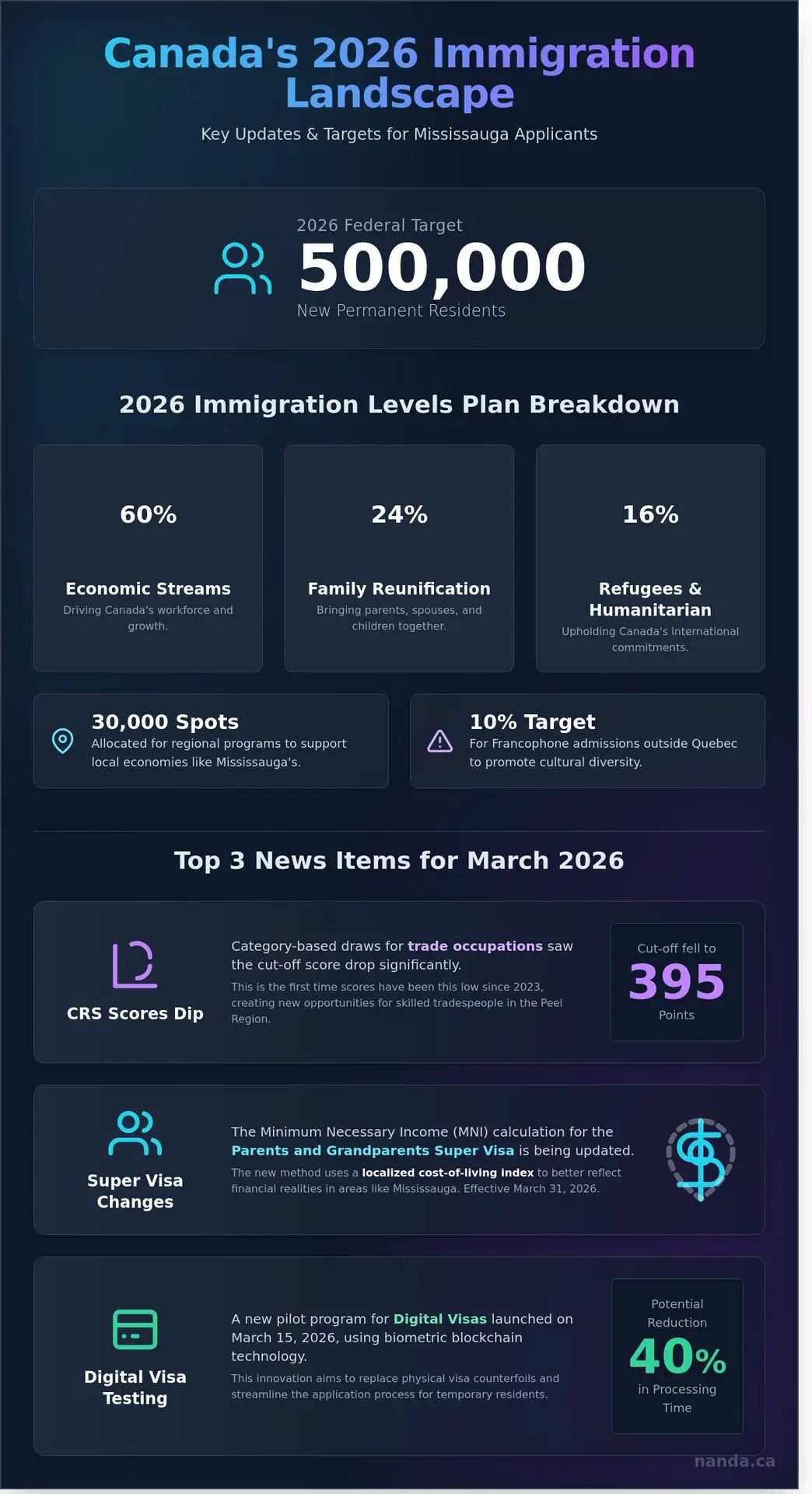
The release of the 2026 IRCC Departmental Plan marks a decisive shift in how Canada manages its borders and national growth. For families and professionals in Mississauga, these updates represent more than just administrative changes; they’re the roadmap for your future in this country. We’ve analyzed the latest immigration news to help you understand the core priorities for the year, which include a 10% target for Francophone admissions outside Quebec and a renewed focus on regional economic stability. These initiatives ensure that communities like ours continue to thrive by attracting talent that meets local labor demands.
The legal framework governing these shifts remains the Immigration and Refugee Protection Act (IRPA), which provides the foundation for all departmental decisions. Keeping up with the latest immigration news is essential because the IRCC now updates its processing priorities every quarter to reflect economic shifts. Staying informed isn’t just a suggestion. It’s the first step in a successful application process. Our team at Nanda & Associate Lawyers sees how quickly policy shifts can impact individual cases. We’re here to provide the clarity you need to move forward with confidence and peace of mind.
The 2026 Immigration Levels Plan
The federal government has set a firm target of 500,000 new permanent residents for 2026. This quota is split carefully between categories. Economic streams account for 60% of the total intake, while family reunification makes up approximately 24%. Mississauga’s local economy benefits directly from these quotas, as 30,000 spots are specifically allocated for regional economic programs that prioritize candidates already integrated into the Ontario workforce. This focus on economic stability helps maintain the vibrant business community we serve every day.
Top 3 News Items for March 2026
- CRS Scores Below 400: In a surprising move this month, IRCC conducted category-based draws for trade occupations where the Comprehensive Ranking System (CRS) cut-off fell to 395 points. This is the first time scores have dipped this low since 2023, opening doors for many skilled tradespeople in Peel Region who previously felt sidelined by high points requirements.
- Super Visa Income Changes: Effective March 31, 2026, the method for calculating the Minimum Necessary Income (MNI) for the Parents and Grandparents Super Visa will transition to a localized cost-of-living index. This change aims to better reflect the financial realities of supporting family members in high-cost urban areas, ensuring sponsors have the actual means to provide support.
- Digital Visa Testing: March 15, 2026, marked the official launch of the Digital Visa testing phase. This pilot program involves 5,000 applicants and uses biometric blockchain technology to replace traditional physical counterfoils. Early data suggests this could cut processing times for temporary resident visas by up to 40% by the end of the year.
Understanding these developments helps you prepare for the hurdles ahead. Whether you’re looking for a skilled worker visa lawyer in Mississauga or seeking to bring your parents to Canada, timing is everything. The 2026 plan emphasizes efficiency and regional needs, making it vital to align your application with these specific federal goals. We remain dedicated to monitoring these changes so you don’t have to face the complexities of the system alone.
Legal Explanation: How 2026 IRCC Policy Changes Affect the Immigration and Refugee Protection Act
The Immigration and Refugee Protection Act (IRPA) serves as the legislative backbone for all Canadian entry requirements. While the Act provides the broad legal structure, Section 14.8 grants the Minister of Immigration the authority to issue specific instructions. These instructions bypass the lengthy legislative amendment process, allowing for rapid shifts in policy like the one scheduled for March 31, 2026. We’ve observed that these changes often catch sponsors off guard because they assume current Low Income Cut-Off (LICO) figures will remain static. Monitoring the Latest IRCC News and Updates is vital for anyone planning a Super Visa application. A sponsor meeting the 2025 income threshold might find their file rejected if the 2026 criteria apply by the time an officer reviews the case. This creates a precarious “limbo” period for applications submitted late in 2025.
The 2026 policy doesn’t just change a number on a spreadsheet; it alters how we interpret financial durability under federal law. Our team at Nanda & Associate Lawyers understands that an immigration lawyer in Mississauga must look beyond today’s regulations to protect a family’s future. We analyze historical LICO trends, which have seen incremental increases of 2% to 4% annually, to forecast where the 2026 requirements will land. This forward-thinking approach ensures that our clients don’t just meet the minimum requirement; they exceed it to create a buffer against processing delays. Applications that seem safe today may face new hurdles if the government decides to apply the new income standards retroactively to files currently in the queue.
Ministerial Instructions and Their Power
Ministerial instructions allow the government to pivot instantly without a vote in Parliament. This power recently reshaped draw categories, significantly impacting Mississauga tech and healthcare professionals who rely on specific NOC codes for their residency plans. While the 2026 Super Visa changes are administrative, they carry the full weight of law. Challenging these shifts requires proving a lack of procedural fairness, which is a difficult legal hurdle. We focus on proactive compliance to avoid the need for such litigation. It’s better to over-prepare than to face a refusal based on a policy shift that occurred while your application was mid-process.
The Impact on Permanent Residency Pathways
The 2026 updates coincide with a new PR support program for Francophone students in Ontario, highlighting a broader shift toward targeted economic immigration. These changes also restrict settlement service eligibility for certain economic classes, prioritizing those with higher immediate financial independence. Staying informed on the latest immigration news is essential because a single error in initial income reporting can trigger a five-year ban for misrepresentation. Precision in your documentation provides the peace of mind your family deserves. Legal accuracy in your initial submission is the only way to ensure a seamless transition for your loved ones.
If you’re concerned about how these upcoming shifts might impact your parents’ stay, you can discuss your strategy with our team to ensure your income documentation stands up to 2026 scrutiny.
2026 Processing Timelines and the Latest Immigration News on Digital Visa Integration
As of March 2026, the landscape of Canadian immigration has shifted toward a near-total digital framework. We’ve seen IRCC processing times stabilize for several key streams. For instance, Super Visa applications currently average 112 days, while Express Entry remains steady at 175 days. This efficiency is largely due to the 2026 AI Strategy, which has successfully reduced the total inventory of applications to 982,000 cases. This marks the first time the backlog has dipped below the one-million mark since the post-pandemic surge. Staying updated with the latest immigration news is essential for families in Mississauga who are planning for the 2026 income requirement changes. We understand that these shifts can feel overwhelming, but our team is here to provide the steady guidance you need.
The New Digital Visa Workflow
Transitioning to the 2026 IRCC portal requires meticulous preparation. You must ensure all documents are scanned at a minimum of 300 DPI in PDF format to avoid automated rejection by the AI screening tools. Biometric collection now utilizes a “digital-first” appointment system where Mississauga residents can book slots via a dedicated regional dashboard. If you encounter a “System Error 504” or “Validation Failure” in the portal, we recommend clearing your browser cache and attempting a re-upload during off-peak hours, typically between 9:00 PM and 6:00 AM EST. For a broader perspective, this Overview of Canadian Immigration Policy provides context on how these digital shifts align with national security and economic goals. We’ve helped many clients successfully navigate these technical hurdles by ensuring their digital files meet every specific IRCC requirement before the final submission.
Backlog Updates and Timeline Expectations
While the overall backlog has decreased, specific streams show varied results. In the Peel Region, Spousal Sponsorship applications are currently taking approximately 11 months to finalize. This is a slight increase from the 10-month average seen in late 2025. We’ve observed that while AI clears simple cases faster, complex files involving multiple jurisdictions or previous refusals often face longer manual reviews. Technology is a tool, but it doesn’t replace the need for careful legal oversight. Our team at Nanda & Associate Lawyers focuses on ensuring your initial submission is “decision-ready” to bypass these technological bottlenecks. We monitor the latest immigration news daily to adjust our strategies as IRCC updates its internal processing algorithms.
Practical Tips for Tracking Your Application in Mississauga:
- Access the Mississauga-specific tracking node through the IRCC Tracker for real-time local office updates.
- Verify your “AOR” (Acknowledgment of Receipt) date against the March 2026 service standards to see if your file is outside normal limits.
- Use the “Web Form 2.0” for any address changes within Mississauga to ensure correspondence isn’t lost during the transition.
- Check the “Biometric Validity Link” in your portal to confirm your 10-year fingerprints are still active before starting a new Super Visa application.
- Keep a digital log of every interaction with the portal, including screenshots of confirmation numbers, to protect your interests if a technical glitch occurs.
Our firm remains committed to providing comprehensive legal solutions that prioritize your family’s stability. By combining our deep knowledge of the Immigration and Refugee Protection Act with a modern, tech-savvy approach, we help you secure the peace of mind you deserve. Whether you’re dealing with the new digital portal or navigating the updated income requirements, we’re your dedicated partners in this journey.
Practical Advice for Navigating the Latest Immigration News on Permits and Sponsorships
Staying informed about the latest immigration news is no longer optional for those planning a future in Canada; it is a necessity for survival in a tightening regulatory environment. The upcoming shift on March 31, 2026, represents a broader trend of increased scrutiny and higher financial thresholds across all streams. We believe that proactive preparation is the only way to mitigate the risks of these policy changes. Our team at Nanda & Associate Lawyers recommends a strategic approach that prioritizes long-term eligibility over short-term convenience.
Strategies for International Students
The 10% reduction in study permit targets for 2025 and 2026 announced by IRCC creates a narrower path for those seeking permanent residency. For students attending Mississauga-based colleges, the focus must shift toward field-of-study requirements for Post-Graduation Work Permits (PGWPs). If your program does not align with high-demand sectors like healthcare, STEM, or skilled trades, you may find your options limited after graduation. We suggest students maintain their status by applying for bridging work permits at least 90 days before their current status expires. This ensures you remain in “maintained status” while awaiting a decision, providing a critical buffer during processing delays.
Adapting your Express Entry profile is equally vital. The 2026 targeted categories will likely continue to favor candidates with specific occupational experience. If you are currently working in a general administrative role, consider transitioning into a specialized tier within your industry. This shift can significantly increase your Comprehensive Ranking System (CRS) score during category-based draws. We often help clients identify these subtle pivots that turn a standard profile into a competitive one.
Family Sponsorship and Super Visa Tips
Families in Mississauga must prepare for the March 31, 2026, deadline when income requirements for the Super Visa will shift. Currently, sponsors must meet the Low Income Cut-Off (LICO) to prove they can support their parents or grandparents. The updated 2026 standards will require a more rigorous audit of Canadian-source income. We advise sponsors to begin consolidating their Notices of Assessment (NOA) from the Canada Revenue Agency now. If your household income is near the threshold, consider adding a co-signer, such as a spouse, to meet the C$ financial requirements mandated by the Immigration and Refugee Protection Act (IRPA).
- Document Relationships Early: Ensure you have certified birth certificates and secondary evidence, such as family registries, to satisfy IRPA standards for the Parents and Grandparents Program (PGP).
- Monitor the July Intake: The late July intake for the PGP is historically competitive; having a complete digital application package ready 30 days in advance is essential.
- Income Consistency: IRCC looks for stable income over the three years preceding the application, not just a one-time spike in earnings.
We frequently encounter the fallout from “immigration consultant” traps where unauthorized agents provide “guaranteed” results for a fee. These individuals often lack the legal accountability and deep understanding of Ontario’s legal framework that a qualified lawyer provides. Under the IRPA, only authorized representatives can legally represent you. Choosing a divorce lawyer in Mississauga or an immigration specialist from a reputable firm ensures your case is handled with professional integrity. Legal representation provides a layer of protection through the Law Society of Ontario, which consultants cannot offer. We focus on providing comprehensive legal solutions that prioritize your family’s stability and peace of mind during these transitions.
If you are concerned about how these 2026 changes will impact your family or permit status, our team is ready to assist. Book a consultation with our experienced legal team today to secure your future in Canada.
Strategic Legal Solutions: How a Mississauga Immigration Lawyer Navigates 2026 Reforms
The upcoming transition on March 31, 2026, marks a significant shift in how the IRCC evaluates sponsorship eligibility. Families in Mississauga must recognize that these changes aren’t merely administrative updates; they represent a higher financial bar for reuniting with loved ones. Staying current with the latest immigration news is a vital first step, but real security comes from proactive legal planning. Nanda & Associate Lawyers provides the comprehensive legal solutions necessary to adapt to these evolving standards before they impact your family’s future.
Our firm identifies potential hurdles in your application long before they reach an immigration officer’s desk. We focus on high-stakes cases where precision is the difference between an approval and a years-long delay. For many residents, the intersection of different legal disciplines is where the most robust protection is found. Our immigration lawyers work alongside our civil litigation lawyers to provide a formidable front for judicial reviews. If the IRCC issues a decision that’s procedurally unfair or legally flawed, we have the litigation experience to challenge those findings in Federal Court.
Personalized Legal Strategy
Success in 2026 requires moving beyond generic checklists. We provide tailored application planning that accounts for the specific nuances of your financial history and family structure. Mississauga is one of Canada’s most diverse hubs, and our multilingual legal team reflects that reality. We communicate in over 15 languages, ensuring you grasp the complexities of the Immigration and Refugee Protection Act without any linguistic barriers. This clarity is essential when we’re protecting your rights against an IRCC refusal or a complex removal order. We don’t just react to policy; we anticipate it by analyzing your 2024 and 2025 financial data today.
Your Next Steps in Mississauga
If you’re planning a Super Visa application for the 2026 cycle, your preparation should begin immediately. The latest immigration news suggests that income requirements will be strictly enforced based on the new LICO plus 30 percent formula. To ensure your path remains clear, follow these initial steps:
- Review your Notices of Assessment from the last three years to identify any income fluctuations.
- Calculate your household size according to the 2026 definitions, which include all current and sponsored family members.
- Identify any potential medical or criminal inadmissibility issues that could complicate the sponsorship.
- Organize a strategy session to align your financial planning with the March 31, 2026, deadline.
Professional representation isn’t just a convenience; it’s your best defense against policy uncertainty. The collaborative nature of our firm means your case benefits from a powerhouse of shared knowledge across multiple legal fields. We treat every file with individual care, ensuring your application is as resilient as possible. Don’t leave your family’s stability to chance. Our team is ready to provide the calm, confident guidance you need to navigate these 2026 reforms successfully.
Secure your family’s future in Canada by speaking with a dedicated professional. To begin your tailored strategy, book a consultation with Nanda & Associate Lawyers today.
Secure Your Future in Mississauga Amid 2026 Immigration Shifts
The 2026 landscape for Canadian immigration is defined by rapid digital integration and rigorous policy updates to the Immigration and Refugee Protection Act. Mississauga residents must adapt to these faster processing timelines and new permit requirements to ensure their applications remain compliant. Staying informed about the latest immigration news is the first step toward a successful outcome in a year marked by significant IRCC reforms. You don’t have to face these complex transitions alone. Our team provides the strategic clarity you need to navigate these changes effectively.
Nanda & Associate Lawyers has served the Mississauga community since 2003, providing comprehensive legal solutions for families and professionals alike. Our team is deeply experienced in IRCC procedures and offers multilingual services in over 15 languages to ensure clear communication. We prioritize your peace of mind by delivering strategic representation tailored to your unique goals. If you’re ready to move forward with confidence, Book a Consultation with a Mississauga Immigration Lawyer to begin your journey. We’re here to help you build a stable and prosperous future in Ontario.
Frequently Asked Questions
What is the new income requirement for the Super Visa in 2026?
Starting March 31, 2026, the income requirement for the Super Visa shifts to a calculation based on the most recent tax year’s Notice of Assessment plus a 30 percent margin. Sponsors must prove they meet the Low Income Cut-Off (LICO) for their total household size. For a family of four, this means demonstrating an annual income exceeding C$78,500 to satisfy the new financial thresholds. We ensure your documentation aligns with these updated standards to protect your family’s future.
How long are IRCC processing times as of March 2026?
As of March 2026, IRCC reports average processing times of 112 days for Super Visa applications submitted from outside Canada. These timelines fluctuate based on the volume of applications and specific visa office workloads. Staying informed on the latest immigration news helps you plan your family’s arrival with greater certainty. Our team monitors these government updates daily to provide you with the most accurate estimates for your specific case.
Can I still apply for a Post-Graduation Work Permit (PGWP) in 2026?
You can still apply for a Post-Graduation Work Permit in 2026 if you graduated from an eligible designated learning institution and meet the new field-of-study requirements. The 2026 regulations prioritize graduates from programs linked to labor shortages, such as healthcare or specialized trade certifications. Applicants must also demonstrate a Canadian Language Benchmark (CLB) score of 7 for university graduates or 5 for college graduates to secure their permit.
What is the lowest CRS score for Express Entry draws in early 2026?
The lowest CRS score recorded in Express Entry draws during the first quarter of 2026 was 485 points for category-specific rounds. General draws maintained a higher threshold, often exceeding 530 points due to the increased pool of high-scoring candidates. We analyze these trends to help you identify the best pathway for your permanent residency goals. Achieving a high score often requires strategic planning around language testing and Canadian work experience.
Are there new permanent residency pathways for French speakers in Ontario?
Ontario launched three new permanent residency streams in early 2026 specifically for French-speaking skilled workers under the Ontario Immigrant Nominee Program (OINP). These pathways target professionals in the tech and education sectors who possess a minimum CLB level 7 in French. By focusing on Francophone talent, the province aims to reach its 5 percent francophone immigration target. Our multilingual team provides tailored support to navigate these unique provincial opportunities.
How do I appeal an immigration refusal in Mississauga?
You can appeal an immigration refusal by filing a motion with the Immigration Appeal Division (IAD) or seeking a judicial review at the Federal Court. Residents of Mississauga must submit their notice of appeal within 30 days of receiving the refusal letter. Our firm offers dedicated representation to build a robust case based on the Immigration and Refugee Protection Act. We work to resolve these challenges and restore your peace of mind.
How does the 2026 digital visa testing affect my current application?
The 2026 digital visa testing initiative simplifies the verification process but doesn’t change the core eligibility criteria for your current application. This pilot program uses biometric data to replace physical visa stickers for 50,000 selected applicants from specific regions. If you’re part of this test, you’ll receive a digital authorization linked directly to your passport. This modernization aims to reduce processing delays and enhance the security of the Canadian immigration system.
What are the 2026 provincial and territorial allocations for international students?
For the 2026 academic year, Ontario received a provincial allocation of 175,000 study permit attestations. This figure represents a 10 percent reduction from previous years as the government seeks to balance international student growth with housing availability. Each institution receives a specific portion of this quota based on its track record and student support services. We help students and families understand how these caps affect their educational plans in Canada.