

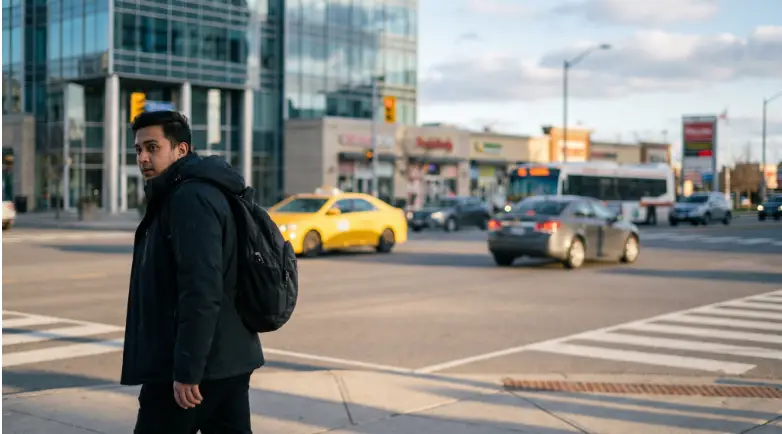
One moment you’re crossing the street. The next, you’re on the ground — confused, in pain, and unsure what just happened. A pedestrian collision doesn’t just injure the body. It messes up every part of your life in ways you may not realize for months or years.
pedestrian accident lawyers Mississauga is growing rapidly as a city and the gap between vehicle and pedestrian infrastructure has become dangerous. Major corridors like Hurontario Street, Eglinton Avenue, and Dixie Road consistently appear in collision reports as high-risk zones for people on foot. Pedestrian injuries represent a disproportionately severe share of all road accident outcomes — far more likely to result in hospitalization than a collision between two vehicles.
What most injured pedestrians don’t realize is that Ontario law gives them specific legal protections that can significantly strengthen their claim. But those protections only work when someone knows how to use them.
pedestrian accident lawyers know the area’s road dynamics and the legal framework surrounding these kinds of cases. It’s the intersection of those two factors — dangerous streets and complex law — that makes specialized legal help not optional. It’s essential.
And it starts with understanding a powerful legal principle working in your favor.
The ‘Reverse Onus’ Benefit: How Ontario Law Works For You
The one key legal principle you need to know about your rights after a car accident is reverse onus. Section 193 of the Ontario Highway Traffic Act is clear that when a motor vehicle hits a pedestrian, it is presumed that the driver was negligent. The burden of proof flips.
In plain terms, the driver must prove they weren’t at fault — not the other way around.
This is a significant protection. As a pedestrian accident lawyers mississauga you only have to prove two things
- That the accident occurred
- That you suffered an injury as a result of it
Once those two facts are proven the driver is presumed to be liable . They then have to present evidence that they took reasonable care . Without that evidence, their negligence stands.
“Reverse onus shifts the legal playing field in favour of the most vulnerable road user — the pedestrian on foot against a vehicle weighing thousands of pounds.”
But don’t think legal protection equals a guaranteed win. In fact, insurance companies and defence lawyers do their best to shift the blame. They’ll scrutinize your actions — whether you crossed mid-block, checked your phone, or stepped out unexpectedly. The presumption of negligence against the driver can be challenged, and often is.
Knowing the law protects you is one thing. Knowing how to use that protection effectively is another — and that starts with what you do in the moments immediately after the collision.
Immediate Steps: Protecting Your Rights After a Collision
The decisions you make in the minutes and hours after a pedestrian collision can directly shape the outcome of your claim. Acting quickly — and correctly — matters.
What Must Happen at the Scene
Under Ontario law, the driver who strikes you is legally required to stop, remain at the scene, and provide reasonable assistance. Don’t let them leave. If they do, note the vehicle’s make, model, color, and license plate immediately. Call 911 right away — a police report creates an official record that becomes critical evidence later. As Preszler Law explains, documenting the collision properly from the start protects your legal position significantly.
Seek Medical Attention — Even If You Feel Fine
Adrenaline is deceptive. Many people walk away from a collision feeling okay, only to discover serious injuries — soft tissue damage, concussions, internal bleeding — hours or days later. Seeing a doctor immediately creates a medical record that directly links your injuries to the accident. Gaps in treatment give insurers ammunition to dispute your claim.
Document Everything and Stay Off Social Media
While you’re still at the scene, photograph the road conditions, weather, traffic signals, skid marks, and any visible injuries. Collect witness names and contact details. A single Instagram post about “feeling better” can be used against you by the defence. Insurers actively monitor social media.
Knowing what to do at the scene is just the first layer of protection. A skilled personal injury lawyer Mississauga residents trust can build on this foundation — but so can understanding the financial benefits available to you regardless of fault, which we’ll explore next.
NO-FAULT BENEFITS (SABS) – Your Financial Safety Net
While you are working on the immediate steps mentioned in the previous section, there is a further safety net in place to work in your favour. Ontario’s Statutory Accident Benefits Schedule (SABS) is a no-fault benefits system, which means you are entitled to financial support regardless of who caused the collision.
That’s a big difference. The Ontario reverse onus principle means that in a civil claim, you must prove that the driver wasn’t negligent. But SABS is a whole other thing – it doesn’t wait for the fault to be determined. You can claim these benefits even if you were partly to blame for what happened.

What If You Have No Auto Insurance?
Many people think that pedestrians have to have auto insurance to use SABS. They don’t. As a pedestrian, you can claim benefits directly against the at-fault driver’s auto insurance policy. If the driver was uninsured, the Motor Vehicle Accident Claims Fund provides a backstop.
However, navigating insurer paperwork while recovering from an injury is genuinely difficult. Knowing which benefits to apply for — and how to document them correctly — is where specialist legal guidance becomes invaluable, as the next section explores.
Why pedestrian accident Lawyers Mississauga is Essential for Your Case
Local knowledge isn’t just a convenience — it’s a strategic advantage. A pedestrian lawyer who knows Mississauga unique traffic environment brings much more to your case than just general personal injury experience.
Local ‘Black Spots’ and Courtroom Familiarity
Certain corridors in Mississauga are pedestrian collision hotspots. The highest rate of car accidents occur at locations on Hurontario Street, Dixie Road, and near major transit stations. A personal injury lawyer Mississauga who is aware of these trends can use location-specific data to establish driver negligence. Knowing the Ontario Superior Court of Justice in Mississauga gives your attorney a perspective of local procedures, judge preferences, and the credibility of medical professionals involved in evaluations – all of which are important.
How To Fight Insurance Adjusters Insurance companies frequently try to minimize the size of pedestrian injury settlements. They may dispute the amount of treatment costs, the severity of injuries, or claim that your no-fault statutory accident benefits do not apply to certain treatments. An experienced personal injury lawyer can counter these tactics with documentation, precedent and medical evidence before the insurance adjuster has a chance to take advantage.
No win, no fee: No financial risk
An affordable pedestrian injury lawyer should be available to you. Many specialist firms work on a contingency fee basis (which means you don’t pay if your case isn’t successful). This removes the financial barrier that often prevents injured pedestrians from claiming the compensation they deserve.
Common Questions: Driver Responsibility and Fault
Pedestrian accident lawyers Mississauga is a shared responsibility — but the law places the heaviest burden squarely on drivers. Here are the most common questions injured pedestrians ask.
In Ontario, the Highway Traffic Act requires drivers to “exercise reasonable care to avoid colliding with a pedestrian at all times.” When a collision happens, the reverse onus provision means the driver must prove they weren’t negligent — not the other way around.
In practice, failure to yield is one of the most frequently cited factors in pedestrian collisions. But speeding, distracted driving and poor visibility also play major roles. Responsibility comes down to the full circumstances of the crash.
This is one of the most common defence tactics used against injured pedestrians. A specialist lawyer is essential here. Traffic camera footage, accident reconstruction evidence, and witness statements can directly refute these claims. The driver still bears the legal burden of proving no negligence occurred.
“The bottom line: Drivers hold primary responsibility for pedestrian safety on city roads — and Ontario law backs that position firmly.”
If you’ve been injured as a pedestrian, don’t navigate this process alone. Book a consultation today to protect your rights and your recovery.
Key Takeaways
- You were in a collision
- You were injured in a collision
- Medical and rehabilitation costs: Costs for treatment not covered by OHIP, like physiotherapy, chiropractic care and psychological counseling
- Attendant care benefits: Compensation for personal care assistance if your injuries affect your independence
- Income replacement benefits: Up to 70% of your gross weekly income (up to a standard limit) if you can’t work while recovering