


A Procedural Fairness Letter from Immigration, Refugees and Citizenship Canada (IRCC) is not a final refusal. It is your last, critical opportunity to address a concern and secure your future in Canada. We understand the wave of panic and confusion that comes with this official notice. The complex legal language, the potential for a misrepresentation finding, and the strict 7 to 30-day deadline can feel overwhelming, placing your family’s or career’s future in jeopardy.
This guide is designed to demystify the process and provide you with a clear roadmap. We will explain exactly what a PFL means, the common reasons they are issued, and the strategic steps you must take to formulate a compelling response. By following our expert advice, you’ll learn how to effectively argue your case and why engaging a dedicated procedural fairness letter immigration Canada lawyer from Nanda & Associate Lawyers Professional Corporation in Mississauga, Toronto, or Windsor is the most decisive step you can take to protect your application.
Key Takeaways
- Understand that a Procedural Fairness Letter (PFL) is not a final refusal but a critical opportunity to formally address concerns raised by Immigration, Refugees and Citizenship Canada (IRCC).
- Recognize the strict and urgent deadlines involved, typically ranging from 7 to 30 days, which require immediate and strategic action to protect your application.
- Discover how to build a compelling response with new evidence that directly counters IRCC’s specific concerns, as simply resubmitting old information is rarely successful.
- Learn why engaging a procedural fairness letter immigration Canada lawyer is crucial for navigating complex issues like misrepresentation or medical inadmissibility to save your application.
What is a Procedural Fairness Letter (PFL) in Canadian Immigration?
Receiving a Procedural Fairness Letter (PFL) from Immigration, Refugees and Citizenship Canada (IRCC) is a critical moment in your immigration journey. It is a formal, written notice indicating that an immigration officer has identified serious concerns or inconsistencies in your application that could lead to its refusal. This isn’t a simple request for a missing document; it’s a direct challenge to your eligibility or credibility.
However, a PFL is not a final decision. It’s an opportunity. The letter invites you to address the officer’s specific doubts by providing a detailed explanation and submitting new evidence within a strict deadline, typically 30 days. Unlike a routine ‘Request for Evidence’ which may ask for an updated form, a PFL signals a fundamental problem. It often points toward potential inadmissibility on grounds like criminality, medical issues, or, most commonly, misrepresentation. The gravity of this letter cannot be overstated, as your response will likely determine the final outcome of your case.
The Role of IRCC Officers in Peel Region Applications
Immigration officers at local processing centres, including the one in Mississauga, are highly trained to scrutinize every detail of an application. They possess significant discretionary power to assess the facts before them. Your response must therefore be exceptionally persuasive and legally sound. At its core, this process is governed by a foundational legal doctrine. Procedural fairness is the legal right to be heard before an adverse decision is made, a right deeply embedded in Canadian administrative law principles. Your response is your chance to exercise that right effectively.
Why You Received This Notice Now
A PFL is issued when your application shifts from ‘standard processing’ to what feels like an adversarial review. The officer has moved past routine checks and is now actively questioning the validity of your claims. This can be triggered by several common red flags:
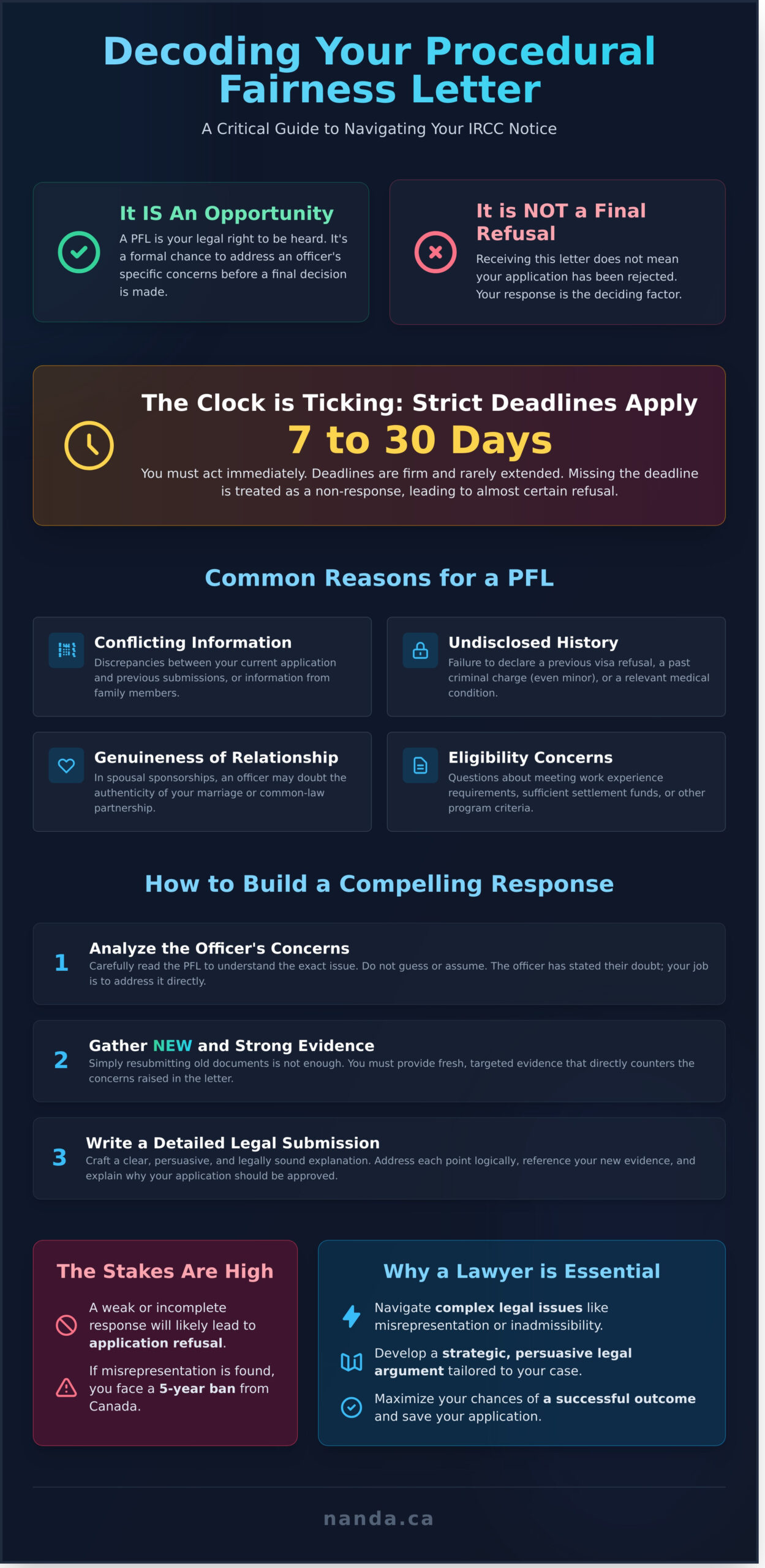
- Conflicting Information: Discrepancies between your current application and previous submissions, or between information provided by you and a family member.
- Undisclosed History: Failure to declare a previous visa refusal from another country, a past criminal charge (even if minor), or a relevant medical condition.
- Genuineness of Relationship: In spousal sponsorship cases, an officer may have doubts about the authenticity of your marriage or common-law partnership based on the evidence provided.
- Eligibility Concerns: An officer may question whether you genuinely meet the work experience requirements for an economic stream or have sufficient settlement funds.
When facing such a complex challenge, many Mississauga residents seek immediate, local counsel. The ability to meet face-to-face, review documents in person, and strategize a response is a distinct advantage. This is a critical juncture where the expertise of a procedural fairness letter immigration Canada lawyer becomes invaluable in protecting your future in Canada.
Key Takeaways: Navigating the PFL Legal Framework
Receiving a Procedural Fairness Letter (PFL) from Immigration, Refugees and Citizenship Canada (IRCC) is a critical moment in your application. It is not a refusal. Instead, it is your legal opportunity to address an officer’s concerns before they make a final decision. This communication is rooted in a fundamental principle of Canadian administrative law: the right to be heard. How you use this opportunity will directly determine the outcome of your case.
Understanding the gravity of a PFL is the first step toward a successful resolution. The stakes are incredibly high, and a misstep can have long-lasting consequences for your future in Canada. Before taking any action, it’s essential to grasp these core realities:
- Your Right to Be Heard: A PFL is the embodiment of your right to natural justice. IRCC is legally obligated to present you with their concerns and give you a fair chance to respond with new information or clarification.
- Strict and Unforgiving Deadlines: PFLs come with firm deadlines, typically 7, 15, or 30 days from the date of issuance. These deadlines are rarely extended without a compelling, legally sound reason. Missing the deadline is treated as a non-response.
- High Risk of Refusal: Failing to respond or submitting a weak, incomplete, or emotional response almost always results in the refusal of your application. The officer will proceed with the information on file, which they have already deemed problematic.
- The Threat of a 5-Year Ban: If the officer’s concern involves misrepresentation, a poor response can lead not only to a refusal but also to a finding of inadmissibility. This carries a severe penalty: a five-year ban on applying to enter Canada.
The path forward requires a strategic, evidence-based approach. A knowledgeable procedural fairness letter immigration Canada lawyer can analyze the officer’s notes, identify the core legal issues, and construct a persuasive response that protects your interests.
The Principles of Natural Justice in Ontario
The concept of procedural fairness is not merely an IRCC policy; it is a legal doctrine upheld by courts across Canada, including in Ontario. It ensures that decisions are made with transparency and integrity. This doctrine grants you two crucial rights: the right to know the specific case against you (the officer’s detailed concerns) and the right to an impartial decision-maker. Ontario courts have consistently affirmed that immigration applicants must be given a meaningful chance to correct errors or provide context before a negative decision is made.
Immediate Steps to Take in Mississauga
Upon receiving a PFL, your actions in the first 24 hours are critical. Panic can lead to costly mistakes. We recommend a calm, methodical approach. First, verify the exact deadline noted in the letter and mark it clearly. Do not be tempted to fire off a quick reply to “get it over with.” A hastily written response without legal review can do more harm than good. The most prudent step is to immediately contact an immigration lawyer Mississauga for an urgent and comprehensive review of your file and the PFL’s contents.
Common Reasons for PFLs and IRCC Process Timelines
Receiving a Procedural Fairness Letter from Immigration, Refugees and Citizenship Canada (IRCC) can be alarming, but it’s crucial to understand that it is an opportunity, not an outright refusal. The letter signals that an officer has concerns about your application and is giving you a final chance to respond before making a decision. This process is a cornerstone of Canadian administrative law, ensuring that applicants are treated fairly. As provincial resources like Immigrate Manitoba explain, the principle of Procedural Fairness is designed to give you a voice. An experienced procedural fairness letter immigration Canada lawyer can help you use that voice effectively.
Several common issues trigger these letters. Understanding the specific concern raised by IRCC is the first step in crafting a compelling and successful response. At Nanda & Associate Lawyers Professional Corporation, we frequently assist clients in Mississauga and the GTA with PFLs related to:
- Misrepresentation: An officer believes you have provided false information or withheld crucial details.
- Medical Inadmissibility: There are concerns that your health condition, or that of a dependent, could place an excessive demand on Canada’s health or social services.
- Genuineness of Relationship: In family class applications, particularly for spousal sponsorship Canada, the officer may doubt the authenticity of your relationship.
- Criminal Inadmissibility: A background check has revealed a past criminal record or charge that may make you inadmissible to Canada.
The Threat of Misrepresentation Findings
Among the most severe PFL triggers is an allegation of misrepresentation. This can arise from an intentional lie or an unintentional omission, such as forgetting to list a previous visa refusal or a short-term job. Section 40 of the Immigration and Refugee Protection Act (IRPA) is the primary tool used for misrepresentation findings. The consequences are dire: application refusal, loss of any status in Canada, potential deportation, and a mandatory five-year ban from applying to enter Canada again.
Timelines for Response and Decision
When you receive a PFL, time is of the essence. For applicants inside Canada, including those in Mississauga, IRCC typically provides a 30-day deadline to submit a response for permanent residency applications. This deadline is strict, and failure to meet it will almost certainly result in a refusal. After we help you submit a detailed response package, IRCC’s review timeline can vary significantly. A straightforward case might receive a final decision in 4 to 8 weeks, while complex cases involving extensive documentation could take several months. Factors that impact this timeline include the visa office’s current workload, the complexity of your legal arguments, and whether the officer requires additional verification. A clear, well-supported submission prepared by a qualified procedural fairness letter immigration Canada lawyer is your best strategy for a timely and positive outcome.
Practical Advice: How to Respond to a PFL Effectively
Receiving a Procedural Fairness Letter is not a refusal. It’s a critical, time-sensitive opportunity to address an officer’s concerns before they make a final decision. A rushed or incomplete response can lead to a refusal, while a strategic, evidence-based submission can save your application. The key is to understand precisely what is being questioned and to provide a comprehensive answer that is both factually and legally persuasive.
First, you must meticulously analyze the specific concerns raised by Immigration, Refugees and Citizenship Canada (IRCC). Is the officer questioning the genuineness of your marriage, citing a lack of joint financial documents? Are they challenging your claimed work experience because the duties listed don’t seem to match the NOC code? Your response must directly target these specific doubts. Simply repeating information you’ve already submitted is ineffective. The officer has seen that evidence and found it insufficient. Your task is to provide new and compelling evidence that fills the gaps they have identified.
This is where a formal legal submission becomes invaluable. It frames your new evidence within the context of Canadian immigration law, demonstrating not just that you are telling the truth, but that the officer’s concerns are legally unfounded based on the complete record. Acknowledging the “reasonableness” of the officer’s initial concern and then systematically dismantling it with evidence and legal arguments is a powerful strategy. It shows you are engaging with their thought process, not just defensively reacting to it.
Building a Robust Evidence Package
Your response package must be organized, thorough, and directly responsive. We often build a point-by-point rebuttal, matching each of IRCC’s concerns with specific pieces of new evidence. This can include sworn affidavits from you or third parties, independent documents like bank statements or phone records, and sometimes expert reports. In some cases, invoking Humanitarian and Compassionate grounds can add a crucial layer to your response, explaining the significant hardship a refusal would cause.
Legal Advocacy vs. Personal Explanations
A personal letter explaining your side of the story can be a useful part of your evidence, but it cannot replace a formal legal submission. A legal brief prepared by a procedural fairness letter immigration Canada lawyer does what a personal letter cannot: it cites relevant case law and IRCC’s own operational manuals to hold the decision-maker accountable to established legal standards. This transforms your response from a personal plea into a compelling legal argument that an officer must seriously consider.
Your future in Canada may depend on this single response. To ensure your submission is structured for the best possible outcome, contact our experienced Mississauga immigration lawyers today to review your Procedural Fairness Letter.
Conclusion: Why a Mississauga Immigration Lawyer is Essential
Receiving a Procedural Fairness Letter (PFL) from Immigration, Refugees and Citizenship Canada (IRCC) can feel like a devastating setback. It represents a critical juncture where your entire Canadian immigration journey is at risk. Your response is not merely a letter; it is a formal legal submission that must be precise, persuasive, and strategically crafted to address the officer’s specific concerns. Attempting to navigate this complex process alone can lead to irreversible consequences, including application refusal and a potential five-year ban from Canada for misrepresentation.
At Nanda & Associate Lawyers, we understand the immense pressure you’re under. Our collaborative approach to complex immigration litigation means your case benefits from the collective insight of our entire team. We analyze every detail of the officer’s concerns, whether they relate to alleged misrepresentation, medical inadmissibility, or criminality. For urgent cases with tight deadlines, our local presence in Mississauga and Brampton provides a distinct advantage, allowing for swift, in-person consultations and efficient document management.
Effective communication is the cornerstone of a successful PFL response. Our multilingual team ensures that nothing is lost in translation. We work closely with you to understand the nuances of your situation, guaranteeing your explanation is conveyed with the clarity and legal force required to satisfy IRCC. This commitment to clear communication overcomes language barriers that can otherwise compromise sensitive legal arguments.
The Nanda & Associate Advantage
Choosing the right legal partner is paramount. Our firm provides a level of support grounded in deep local experience and a commitment to personalized advocacy. When you work with us, you gain a dedicated ally focused on protecting your future.
- Decades of Experience: With over 20 years of experience resolving complex IRCC challenges for clients throughout Peel Region, we have a proven track record of success.
- Personalized Solutions: We don’t believe in one-size-fits-all answers. Your application is treated as our own priority, with a tailored strategy designed for your unique circumstances.
- Comprehensive Legal Support: Our expertise extends beyond PFLs. We provide a full spectrum of immigration services, from initial applications to judicial reviews and appeals at the Federal Court of Canada.
Secure Your Future in Canada Today
The stakes are simply too high to leave your response to chance. Engaging a professional procedural fairness letter immigration Canada lawyer is the most effective step you can take to protect your application and your Canadian dream. A well-prepared response can transform a potential refusal into an approval, and our team has guided countless clients through this very process.
Your journey to Canada deserves the strongest possible defence. Remember, many PFLs are successfully overcome with the right legal strategy and compelling evidence. Don’t let this challenge define your future. Let us provide the strategic advocacy you need to move forward with confidence.
Take the first step toward resolving your immigration concerns. Book a consultation with our Mississauga immigration lawyers today.
Secure Your Immigration Future with a Strategic PFL Response
Receiving a Procedural Fairness Letter is a critical moment in your immigration journey, but it is not a final refusal. It’s your opportunity to directly address IRCC’s concerns with a clear, compelling, and evidence-based response. A strategic submission can significantly impact the final decision on your application, turning a potential obstacle into a successful outcome.
Navigating this complex process requires specialized legal expertise. A dedicated procedural fairness letter immigration Canada lawyer ensures your case is presented persuasively and meets all legal requirements. At Nanda & Associate Lawyers, we have been providing comprehensive legal solutions for clients in Mississauga and Brampton since 2003. Our multilingual team, speaking over 15 languages, is ready to assist with PFLs related to PR, spousal sponsorship, and LMIA applications. Let our experience provide you with the peace of mind you deserve.
Your future in Canada is too important to leave to chance. Take decisive action today.
Speak with a Mississauga Immigration Lawyer about your PFL today.
Frequently Asked Questions
Is a Procedural Fairness Letter a refusal of my application?
No, a Procedural Fairness Letter (PFL) is not a final refusal. It is a critical notification that an immigration officer has serious concerns that, if left unaddressed, will likely lead to a refusal. IRCC provides this as a final opportunity for you to submit new evidence or legal arguments to resolve the specific issues they have raised. A persuasive response is your last chance to guide your application toward a positive decision and avoid a negative outcome.
Can I ask for an extension on my Procedural Fairness Letter deadline?
Yes, you can request an extension, but it is not automatically granted. You must submit a formal request to IRCC before your original deadline, which is typically 30 days, and provide a strong reason for the delay, such as needing time to gather official third-party documents. An immigration officer will review your request and has the discretion to approve or deny it. It is vital to act quickly and not assume an extension will be given without receiving confirmation.
What happens if I don’t respond to a Procedural Fairness Letter?
Failing to respond to a Procedural Fairness Letter will almost certainly result in the refusal of your application. The immigration officer will proceed to make a final decision based solely on the information in your file, which includes their unresolved concerns. By not responding, you forfeit your only chance to address these serious issues. The officer will likely conclude their concerns are valid, leading to a refusal and potentially more severe consequences like a ban.
Do I need a lawyer to respond to an IRCC fairness letter?
While you are not legally required to hire a lawyer, professional legal representation is highly recommended. The issues raised in a PFL are often complex and the consequences of a poor response are severe. An experienced procedural fairness letter immigration Canada lawyer can properly analyze the officer’s concerns, craft persuasive legal arguments, and compile a robust evidence package. Their expertise significantly increases your chances of a successful outcome and helps you avoid critical mistakes.
Can a PFL lead to a 5-year ban from Canada?
Yes, a PFL can lead to a five-year ban if the issue involves an allegation of misrepresentation. If IRCC believes you provided false information and your response fails to satisfy the officer, you can be found inadmissible under section A40(1)(a) of the Immigration and Refugee Protection Act. This finding of misrepresentation carries a mandatory five-year ban from applying for any visa to Canada, which is why a strategic response is so critical.
How long does IRCC take to make a decision after I respond to a PFL?
There is no standard processing time for a decision after you submit your PFL response. The timeline can vary widely, from as little as four weeks to over six months. This duration depends on the complexity of your case, the specific visa office’s workload, and the quality of your submission. A clear, well-supported response may facilitate a quicker review, but you should be prepared for a waiting period while the officer completes their final assessment.
What should I do if I missed the deadline for my PFL response?
If you have missed the deadline, you should still prepare and submit your complete response as quickly as possible. An officer is not obligated to accept a late submission, but they may use their discretion to consider it if a final decision has not yet been made. Your submission must include a compelling explanation for the delay. We strongly advise contacting an immigration lawyer immediately to help navigate this urgent and time-sensitive situation.
Can I still apply for PR if I received a PFL for misrepresentation?
If your PFL for misrepresentation results in a formal finding of inadmissibility, you will be banned from Canada for five years. During this ban, you cannot apply for permanent residence or any other type of Canadian visa. Once the five-year period has passed, you are eligible to apply again. However, the misrepresentation finding remains permanently on your immigration record and will subject any future applications to a higher level of scrutiny by IRCC.