




Key Takeaways
-
Understand the essential legal requirements for wills in Ontario to ensure your will is valid and enforceable.
-
Learn why consulting a Mississauga Wills Lawyer is crucial for creating a legally valid will and preventing potential family disputes.
-
Follow a clear step-by-step process for drafting your will, from initial considerations to finalizing the document.
-
Gain insights on selecting the right executors and guardians to fulfill your wishes and manage your estate effectively.
-
Discover the importance of keeping your will updated to reflect significant life changes, ensuring your wishes remain relevant.
Table of Contents
What if your will, meant to protect your loved ones, could inadvertently lead to family disputes? This unsettling thought is a reality for many who fear creating an invalid will. A legally valid will is crucial in ensuring your assets are distributed according to your wishes, but the process can be daunting. With expert guidance from a Mississauga wills lawyer, you can navigate the complexities of Ontario’s legal requirements with confidence. In this article, you’ll learn how to craft a will that stands up to scrutiny, minimizes the potential for conflict, and provides peace of mind for you and your family. We’ll walk you through the essential steps, so you can leave a legacy that reflects your intentions while safeguarding your family’s future.
Understanding the Legal Requirements for Wills in Ontario
Creating a legally valid will in Ontario is essential for ensuring your wishes are honored after your passing. A valid will must meet specific criteria defined by the Succession Law Reform Act, which governs estate matters in the province. Understanding these legal requirements is crucial, especially for residents of Mississauga, where local laws can further influence will creation.
At its core, a legally valid will in Ontario must be made by an individual who is at least 18 years old and possesses the mental capacity to understand the nature and effect of the document they are signing. This means they must be able to comprehend the extent of their assets and the implications of their decisions regarding their distribution. The will must also be in writing, either typed or handwritten, and signed by the testator (the person making the will) in the presence of at least two witnesses.
Following Ontario-specific laws is vital. Non-compliance with these regulations can lead to disputes among heirs, potentially resulting in your wishes not being fulfilled. For instance, if required witnesses are not present or if the will is not properly executed, it may be deemed invalid. In Mississauga, local community customs may also influence how wills are perceived and executed, adding another layer of complexity that a qualified Mississauga Wills Lawyer: How to Make a Legally Valid Will in Ontario can help you navigate.
Key Elements of a Valid Will
-
Legal Age and Mental Capacity: You must be at least 18 years old and mentally competent.
-
Presence of Witnesses: Two witnesses must be present when you sign your will, and they should not be beneficiaries.
-
Proper Execution and Storage: The will should be stored in a safe place, and its location should be communicated to your executor.
Common Misconceptions About Wills
There are several myths surrounding wills that can lead individuals astray. One common misconception is that informal wills, such as verbal agreements or unsigned documents, hold legal weight. However, these often lead to uncertainty and disputes. Formal documentation is crucial, as it provides clear evidence of your intentions.
Another point of confusion involves handwritten wills, also known as holograph wills. While they are permissible in Ontario, they can be more easily contested than formally drafted documents. To avoid complications, it is advisable to consult with a legal professional who specializes in wills and estates.
Ultimately, adhering to the legal requirements for wills in Ontario not only ensures your wishes are carried out but also provides peace of mind for you and your loved ones. Engaging a Mississauga Wills Lawyer: How to Make a Legally Valid Will in Ontario can help ensure that your will is valid, clear, and reflective of your intentions.
The Importance of Professional Legal Assistance
Creating a legally valid will is a complex task, and seeking the guidance of a Mississauga Wills Lawyer: How to Make a Legally Valid Will in Ontario can make all the difference. Professional legal assistance not only ensures that your will meets all legal requirements but also helps you avoid potential pitfalls that could render it invalid.
One of the key benefits of hiring a wills lawyer is their ability to prevent family disputes. Wills can often lead to disagreements among heirs, especially when assets are involved. A knowledgeable lawyer can clarify your intentions and help express them in a way that minimizes confusion, thereby reducing the likelihood of conflict among family members.
Lawyers also play a crucial role in customizing wills to fit your unique situation. Everyone’s financial and familial circumstances vary widely; thus, a one-size-fits-all approach is rarely effective. A skilled attorney can help you draft a will that considers your specific assets, beneficiaries, and wishes, ensuring that your estate is distributed according to your desires.
Ongoing legal support is another significant advantage. Life circumstances change—whether due to marriage, divorce, or the birth of a child. A wills lawyer can assist you in updating your will to reflect these changes, helping to safeguard your interests over time.
How a Lawyer Can Protect Your Interests
-
Identify potential risks: Lawyers can spot issues that you may overlook, such as debts or liabilities that need addressing in your will.
-
Ensure all assets are covered: A qualified lawyer will make sure every asset, from property to investments, is included in your will.
-
Provide tailored legal advice: Each person’s financial landscape is different. A lawyer will give you advice that reflects your particular circumstances.
Choosing the Right Mississauga Lawyer
When selecting a wills lawyer in Mississauga, consider factors such as experience, client reviews, and their understanding of Ontario’s specific regulations. During the initial consultation, ask questions like:
-
What is your experience with wills similar to mine?
-
How do you charge for your services?
-
What steps will you take to ensure my will is valid?
For a comprehensive overview of local options, check out wills and estate lawyers in Mississauga.
Choosing to work with a qualified professional not only provides peace of mind but also protects your loved ones from unnecessary legal turmoil. If you’re ready to take the next step in ensuring your legacy is properly managed, consider reaching out to a reliable legal expert today.
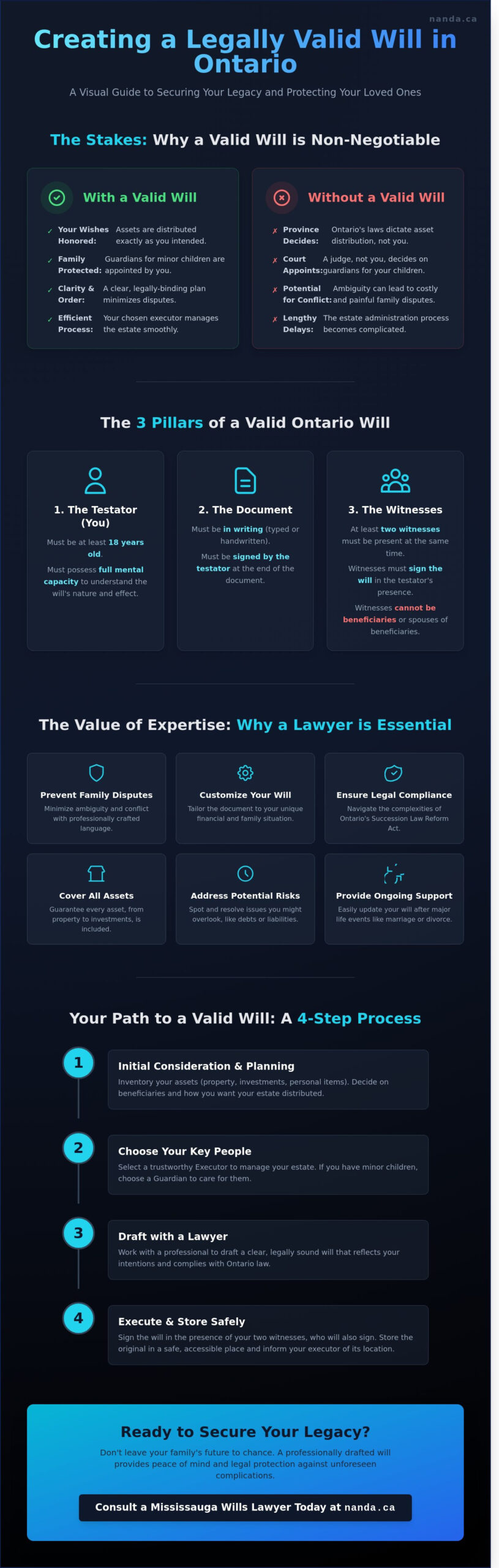
Step-by-Step Process for Creating Your Will
Creating a legally valid will in Ontario involves a systematic approach to ensure that your wishes are clearly outlined and legally enforceable. Here’s a comprehensive guide on how to navigate this process with the assistance of a Mississauga Wills Lawyer: How to Make a Legally Valid Will in Ontario.
Preparation: Gathering Necessary Information
The first step in drafting your will is to gather all necessary information. This includes:
-
Assets and Liabilities: List all significant assets such as real estate, bank accounts, investments, and personal belongings. Also, account for any outstanding debts or liabilities.
-
Beneficiaries: Identify individuals or organizations who will inherit your assets. Consider any special bequests, like family heirlooms or specific monetary gifts.
-
Future Changes: Think about how potential changes in your personal circumstances, such as marriage, divorce, or the birth of children, could impact your will.
Drafting Your Will: Key Considerations
Once you have gathered your information, the next step is to draft your will. Collaborating with a qualified lawyer is crucial to ensure that your document is clear and legally sound. Key considerations include:
-
Legal Clarity: Your lawyer will help you use precise language to avoid ambiguity regarding your wishes.
-
Specific Bequests: Clearly outline any specific gifts you wish to make, including conditions if applicable. For example, you might specify that a certain asset should go to a beneficiary only if they reach a certain age.
-
Review and Amendments: After drafting, review the document thoroughly with your lawyer. Be open to making amendments based on their advice to ensure compliance with Ontario laws.
Executing and Storing Your Will
The final step in the process is executing and securely storing your will. Proper execution involves:
-
Witnesses: Ensure that at least two witnesses are present when you sign your will. They must not be beneficiaries to avoid any conflicts of interest.
-
Safe Storage: Store your will in a safe place, such as a safety deposit box or with your lawyer. Make sure your executor knows where to find it.
Choosing Executors and Guardians: Practical Advice
Choosing the right executor and guardian for your will is crucial. These decisions directly affect your loved ones and how your estate will be managed after your passing. A knowledgeable Mississauga Wills Lawyer: How to Make a Legally Valid Will in Ontario can guide you through this process, ensuring that your wishes are respected and your family’s future is secure.
Responsibilities of an Executor
The executor plays a vital role in managing your estate. Their primary responsibilities include:
-
Managing and distributing assets: The executor ensures that your assets are allocated according to your wishes as outlined in your will.
-
Paying debts and taxes: They are responsible for settling any outstanding debts and taxes from the estate before distribution to beneficiaries.
-
Resolving claims: The executor must handle any claims against the estate, which may include disputes from creditors or beneficiaries.
When selecting an executor, consider their reliability, organizational skills, and ability to handle financial matters. This person should be someone you trust implicitly, as they will be tasked with making important decisions on your behalf.
Appointing a Guardian for Children
If you have minor children, appointing a guardian is essential. This individual will take on the responsibility of raising your children if you are no longer able. Some key considerations include:
-
Values and lifestyle: Choose someone whose values align with your own and who can provide a nurturing environment for your children.
-
Discussing choices: Talk openly with potential guardians about your wishes and their willingness to take on this significant responsibility.
-
Legal implications: Be aware that a guardian must be formally appointed in your will to ensure that your intentions are legally recognized.
Having these conversations can lead to better understanding and alignment among family members. Open dialogue about your choices can also prevent confusion and conflict later on.
In conclusion, selecting the right executor and guardian is not just about fulfilling legal obligations; it’s about protecting your family’s future. A dedicated Mississauga Wills Lawyer: How to Make a Legally Valid Will in Ontario can assist you in making these critical decisions, ensuring that your will reflects your wishes accurately.
Contact us today to discuss how we can help you create a comprehensive estate plan that safeguards your loved ones and secures their future.
Keeping Your Will Up to Date
Creating a will is an essential step in ensuring your wishes are honoured after your passing. However, just drafting a will isn’t enough. Keeping your will up to date is equally important, as life is filled with changes that can significantly affect your estate planning. Regular updates help ensure that your will accurately reflects your current circumstances and intentions, providing peace of mind for both you and your loved ones.
When to Review and Update Your Will
Several major life events and changes warrant a review of your will:
-
Marriage or Divorce: These events often necessitate significant changes to beneficiaries and asset distribution.
-
Birth or Adoption of Children: Adding a child to your family requires you to account for their future in your will.
-
Significant Changes in Assets: Acquiring or selling real estate, investments, or other substantial assets should prompt an update.
-
Changes in Financial Status: A sudden increase or decrease in your financial situation can impact how you wish to distribute your estate.
Legal experts recommend reviewing your will at least every three to five years, even if no major life events occur. This ensures that it remains compliant with current laws and accurately reflects your wishes.
The Role of a Lawyer in Will Maintenance
Working with a Mississauga Wills Lawyer can greatly simplify the process of maintaining your will. A lawyer provides invaluable guidance on:
-
Necessary Amendments: They can identify specific areas that need updating and help you understand the implications of those changes.
-
Legal Compliance: Wills must comply with Ontario laws, and a lawyer ensures that your will meets all legal standards and requirements.
-
Efficient Updates and Storage Solutions: They can assist with the logistics of updating and securely storing your will, making it easily accessible when needed.
By regularly updating your will with the help of a qualified professional, you ensure that your estate planning remains effective, reducing the likelihood of disputes among heirs and providing clarity about your wishes. Trust a Mississauga Wills Lawyer: How to Make a Legally Valid Will in Ontario to guide you through this essential aspect of your life planning.
Secure Your Future with Expert Guidance
Creating a legally valid will in Ontario is essential for protecting your loved ones and ensuring your wishes are honored. Key takeaways include understanding the legal requirements, recognizing the importance of professional legal assistance, and keeping your will up to date. By partnering with a Mississauga Wills Lawyer: How to Make a Legally Valid Will in Ontario, you can navigate the complexities of estate planning with confidence.
Don’t leave your family’s future to chance. Contact us for a consultation to create your will today! Our experienced team in Mississauga is here to provide dedicated support tailored to your unique needs. Take the first step toward peace of mind and secure your legacy.
Frequently Asked Questions
What makes a will legally valid in Ontario?
For a will to be legally valid in Ontario, it must be in writing, signed by the testator (the person making the will), and witnessed by at least two individuals who are present at the same time. These witnesses cannot be beneficiaries of the will. If these criteria are met, the will is recognized under the Ontario Succession Law Reform Act, ensuring that the testator’s wishes are honored after their passing.
Do I need a lawyer to make a will in Mississauga?
No, you don’t necessarily need a lawyer to make a will in Mississauga; however, consulting a Mississauga wills lawyer is highly recommended. A lawyer can help ensure that your will complies with legal requirements, accurately reflects your wishes, and accounts for any complexities in your estate. This professional guidance can prevent costly disputes or misunderstandings down the line.
How often should I update my will?
It’s advisable to review and potentially update your will every three to five years or whenever significant life changes occur, such as marriage, divorce, the birth of a child, or acquiring new assets. Changes in Ontario law may also necessitate an update to ensure your will remains valid and effective. Regular reviews help ensure that your wishes are reflected accurately.
What happens if a will is contested in Ontario?
If a will is contested in Ontario, the court will assess the validity of the will based on evidence presented by the parties involved. Common grounds for contesting a will include lack of capacity, undue influence, or improper execution. The process can be lengthy and complex, often resulting in litigation, so having a well-prepared will can help minimize the risk of disputes.
Can I name multiple executors in my will?
Yes, you can name multiple executors in your will. In Ontario, it is common to appoint more than one executor to share the responsibilities and make the process more manageable. However, be aware that all executors must act jointly unless specified otherwise, which may lead to complications if they disagree. Choosing trustworthy individuals can facilitate smoother administration of your estate.
What is the role of a guardian in a will?
A guardian is a person you designate in your will to care for your minor children in the event of your death. The guardian’s role is to provide a stable and nurturing environment, ensuring the children’s welfare and upbringing align with your values. It’s essential to discuss this role with the chosen guardian beforehand to confirm their willingness and capability to take on this important responsibility.
Disclaimer
This content is for general information only and does not constitute legal advice or create a lawyer-client relationship. Every case is different—please consult a qualified lawyer for advice specific to your situation.